


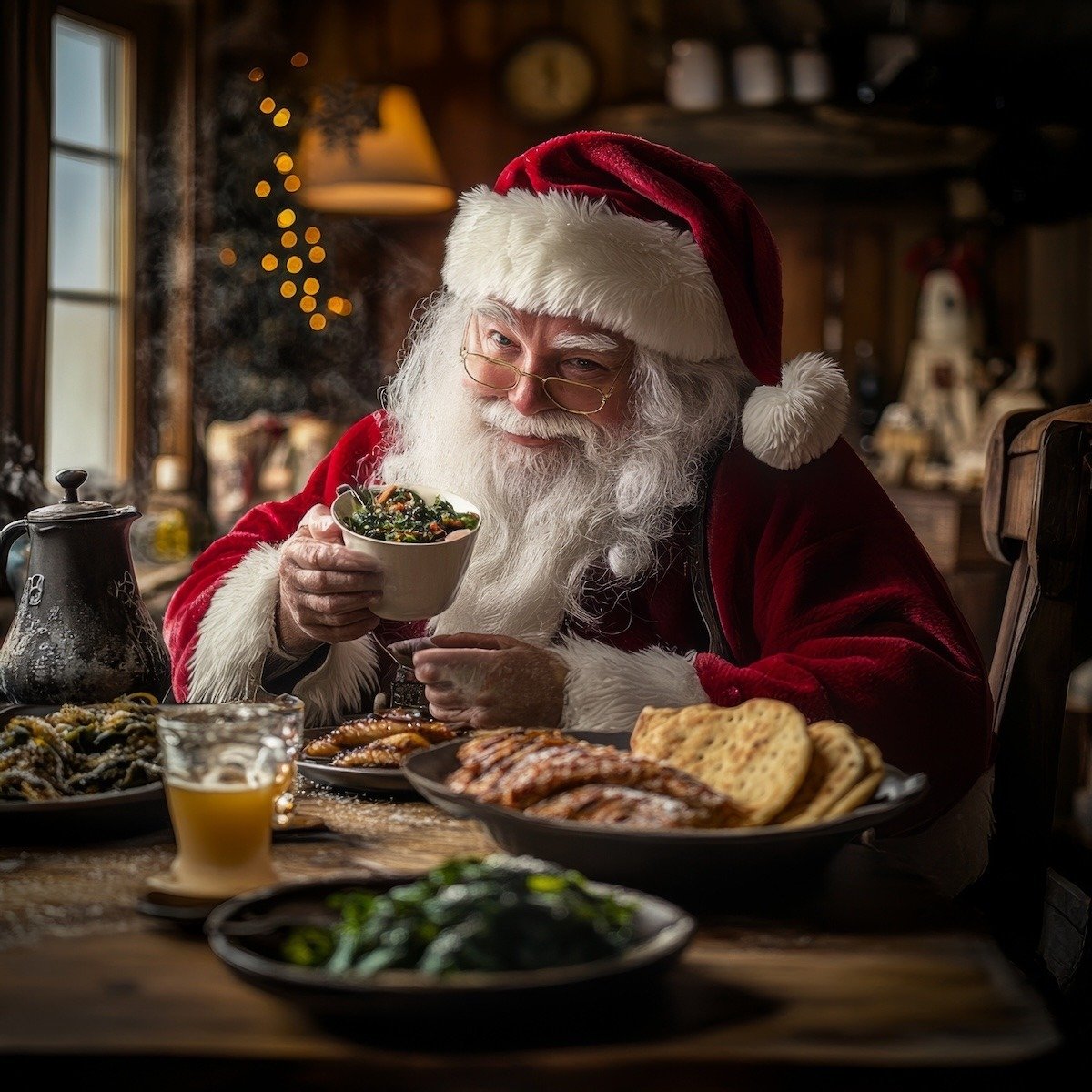
North Pole Christmas Eve Meal: What Mrs. Klaus serves Santa for dinner and snacks
On Christmas Eve, Santa Claus prepares his long night gift. But before he goes out for the sleigh, he enjoys a heartfelt, authentic meal with Mrs. Klaus at his Arctic home.
The Arctic is different from other parts of the world. It’s cold, harsh and barren. The ingredients here are simple yet nutritious. Mrs. Klaus knows how to make the most of what they have. She prepares a traditional east feast made with food native to the Arctic.
Santa’s dinner begins with a warm bowl of caribou stew, rich in root vegetables like turnips and carrots. Mrs. Klaus offers an Arctic Charter for the main course, and is freshly caught from nearby frigid waters. The meal is well balanced with a small plate of seaweed salad and tart cloudberry. Santa then enjoys a bowl of hot Arctic tea from local herbs.
This diet is more than nutrition. It’s about preparing for a long night. Santa needs all the energy he can travel around the world and deliver gifts to his children everywhere. Mrs. Klaus ensures that he is well raised, warm and ready. After dinner, it was time to set off into the night sky.
What is on Mrs. Klaus’s menu?
1. Caribou Stew
Caribou is a staple food in the Arctic. Mrs. Klaus was able to prepare a hearty stew, slowly cooked with root vegetables such as turnips, carrots and onions. The caribou meat is lean but flavorful, while the stew is rich and warm, making it a great way to invigorate Santa.
2. Arctic charcoal or salmon
Fish becomes an important part of the Arctic diet. Arctic char or salmon, both found in Arctic waters, are a common choice. Mrs. Klaus can prepare the fish by grilling or roasting it, and perhaps seasoning it with herbs like dill. Dill can be found in cold weather or served in a simple butter sauce made from seal fat or another local fat source.
3. Root vegetables and berries
Fresh fruits like apples and citrus do not grow in the Arctic, but tough root vegetables like turnips, rutabagas and potatoes (which can survive in cold climates) make the perfect side dish. Additionally, lingonberries or cloudberries can be used to make small side dishes and sauces to complement your main meal. These fruits grow wild in Arctic climates and add a refreshing contrast to the rich meat.
4. Seaweed and moss salad
Mrs. Klaus was able to prepare the seaweed salad using kelp and other edible seaweed that grow in cold waters near the Arctic. She may also include reindeer moss (a type of lichen) in her dishes. Although it is not common to eat large quantities, Indigenous Arctic people use moss and seaweed for food and nutrition.
5. Aurora Soup
A warm soup made from a mixture of meat and vegetables makes a pleasant addition. This is a mass of root vegetables like caribou meat, fish, parsnips and onions, and can be made at a fat base of sealed fat or whale. It is a rich, high energy dish, keeps Santa full and ready for his long nights.
6. Arctic bread or flatbread
Breads made from barley (growing in cold climates) or other voluminous grains can be packed and baked into thin brain breads or breads. This is served with stews and soups. It may not be as light or fluffy as we think of bread, but it is nutritious and practical for Arctic life.
7. Berries in the snow (dessert)
Mrs. Klaus was able to make simple but delicious treats with cloudberries and lingonberries for dessert. These tart berries can be mixed with a bit of sugar and served on a bed of snow or ice to mimic a cold, winter dessert. Alternatively, you can prepare a traditional berry compote and serve it with a small drop of cream (which may come from a reindeer or another local animal).
8. Hot drink: Arctic tea
To warm up Santa before he left, Mrs. Klaus was able to prepare a cup of hot Arctic tea made from local herbs such as Villough and Labrador Tea. Tea becomes soothing and helps to hydrate Santa before his big journey.
This authentic diet represents the type of food available in the harsh, cold environments of North Pole, with a focus on sustainable local ingredients such as reindeer, Arctic fish, root vegetables and hardy fruits. It is a nourishing, heartfelt meal that reflects the practicality of life in such remote, extremely cold places.
Midnight and morning snacks
Santa snacks on cookies Christmas Eve
On Christmas Eve, Santa begins his legendary journey and delivers gifts to children around the world. As he travels from home to home, thoughtful children greet him with fun snacks. These treats warm his heart and give him the energy to continue throughout the long night.
In the US and Canada, children set cookies and milk, which have become important traditions. From classic chocolate chips to sugar cookies shaped like Christmas tree, the varieties look endless. Many families also remember Santa’s hardworking reindeer, leaving carrots as fuel. Meanwhile, in the UK, families stick to tradition by serving minced pie. These rich and spiced pastries are often combined with a glass of sherry or warm milk.
In Australia and New Zealand, where Christmas coincides with summer, children leave light snacks like slices of lamington and Pablova. They also include refreshing drinks to help Santa cool. In Sweden, Santa finds some Pepal Cacole cookies waiting for him.
As he travels through Europe, Santa enjoys even more variety. In Germany, children offer either Lebkuchen or Stollen, which is sweet and satisfying. In Italy, known for its rich holiday traditions, Santa or Bab Bonatal can be found in slices of Panettone or slices of Torron, a nougat filled with delicious nuts.
All over the world, kids surprise Santa with local flavours. In Latin America, he may find Tamales or crispy bunuelo waiting for him. Meanwhile, in Japan, children embrace the spirit of the season by leaving Santa with slices of the famous Christmas cake.
Each snack burns Santa’s physical energy, filling his heart with joy and love. These thoughtful offerings remind us why his journey is important. He tastes the unique taste of each country, so he feels the magic of Christmas, and prepares both him and his reindeer for his next stop in cheery spirits.
