


Key takeout
•Germinated onions are safe to eat, but may have a slightly bitter taste.
•Use immediately once the onion starts to germinate.
• Use onions sprouted in other strong flavor recipes, such as chiles, which have less noticeable bitterness.
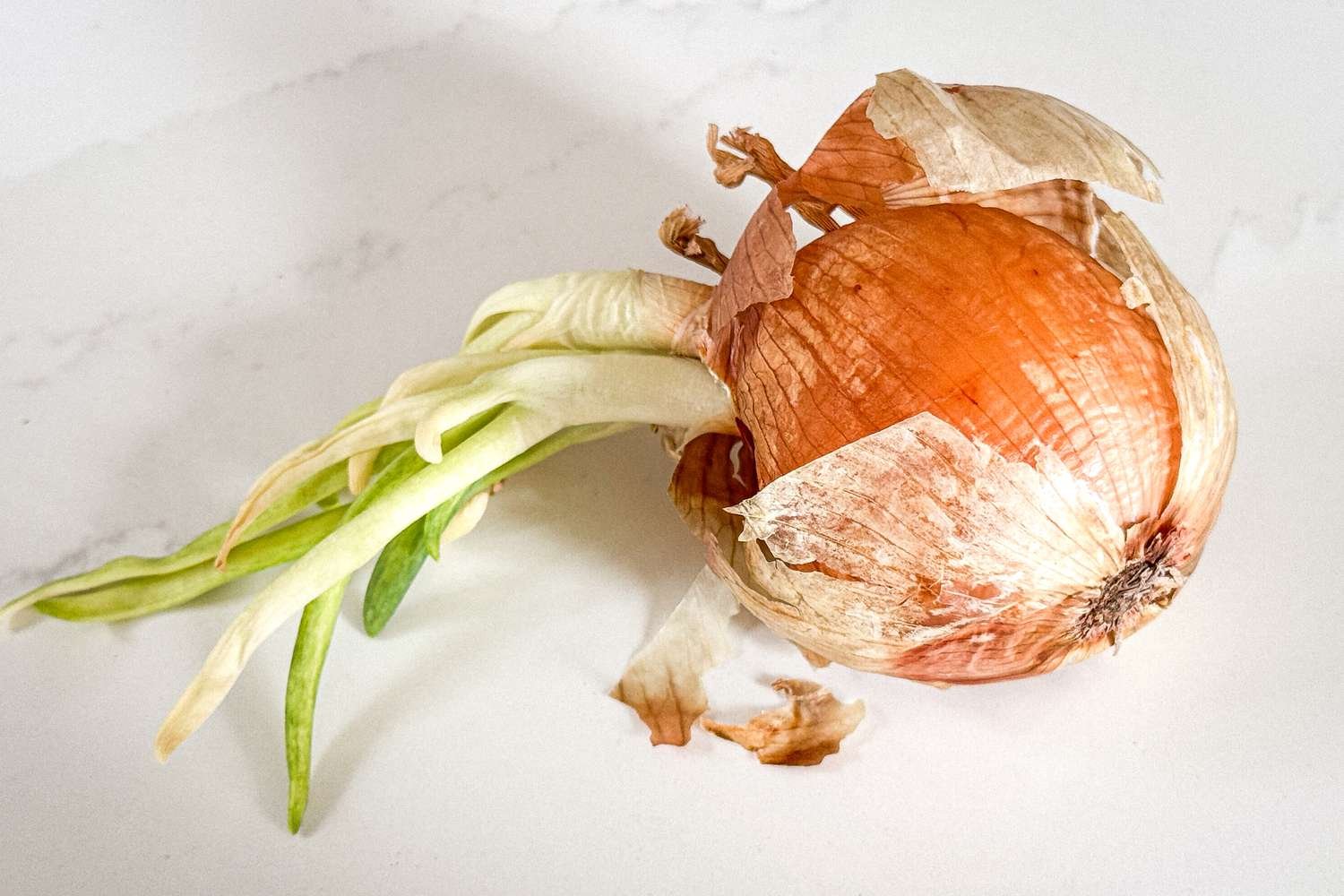
With the recipe and knife in hand, grab the onion and ready to reach the dicing, but you notice that the green stems protrude towards the top. You’ll want to read this before reaching for the takeout menu.
Can sprouted onions be safely eaten?
The good news is that you can eat sprouted onions. “The sprouted onions are completely safe to eat. There are no harmful toxins,” explains Anne Ziata, chef at the Institute of Cooking Education. “The buds convert the sugar in the onion bulbs, causing energy to grow and leave the onion with an unpleasant bitterness,” says Ziata. “But the flavor starts to deteriorate and dry out as it sprouts.”
Agrees Emily Burner, chef instructor and lead chef of online plant-based culinary arts and food management at the Institute of Cooking Education. “They may have a bitter taste, so it’s best to remove those buds when cooking,” she explains.
Simply recipe/Getty image
How should I use sprouted onions?
Once the onion starts to sprout, you’ll want to use it as soon as possible to avoid any further flavor or texture changes. Germinated onions can be used in the same way as onions, but are generally best used in dishes where a slightly bitter taste may be noticed. “The texture and flavor are compromised a bit, so we cook it with recipes that contain many other powerful ingredients, such as chili and meatloaf,” says Burner.
However, you don’t want to use places where onions are usually the highlight or the main focus of your dish. Ziata explains that sprouted onions are less sweet and tender. “Do not put it in French onion soup or put it raw in salads or sandwiches,” she says.
If you like to maximize your vegetables and minimize what you throw in the compost box, you can also use the actual buds of onion in the recipe. “You can smear the buds and stir-fry with stir-fry, like spring onions or green onions,” says Ziata.
Why do onions sprout?
You can see that the onion germinated when green stems appear on top of the onion. This is the onion’s efforts to grow roots to replicate more onions. Onions sprout because they have too much water. This is the important reason why it’s not wise to store onions in the fridge. If you are exposed to too much moisture and lack air circulation, buds are inevitable.
When you should throw germinated onions
If the onion is germinated but doesn’t look good, dry, or shows signs of mold, you’ll want to throw it in compost. “If the onion is very old and shows signs of rot, don’t use the buds,” says Burner.
How to avoid germination
How onions are stored affects when they are prone to sprouting. Like potatoes, onions should be stored in dry, ventilated areas with minimal light. “Store the onions in a cool, dark place,” says Burner. “Onions will want to sprout if they see sunlight. If you need to keep onion in a bag or bowl, make sure it’s a mesh bag or wire bowl to promote proper air circulation.
Potatoes and onions often come together in recipes, but should not be stored together. “Onions release gas that encourage the onions to ruin them more quickly, so keep them away from potatoes and apples,” Zaita says.
Also, do not store onions in plastic bags or wrap them in plastic. This reduces shelf life, according to the National Onion Association.
