


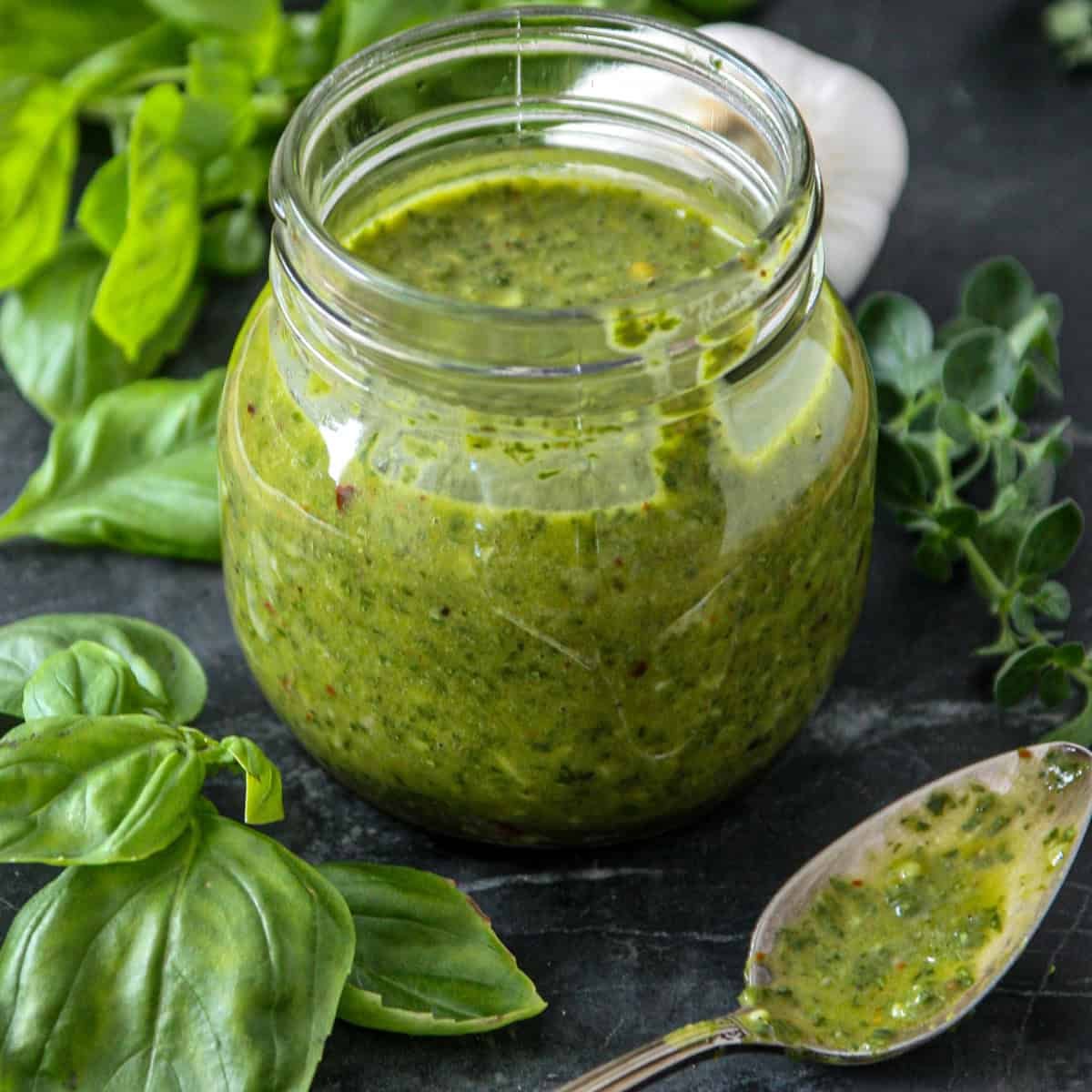


This basil chimichurri sauce is full of fresh, tangy flavor. A delicious twist on the classic Argentine parsley sauce. This versatile sauce with fresh basil, oregano, garlic, lemon, and vinegar is made in minutes.

Would you like to save this recipe?
Please enter your email address. Send to your inbox. Plus, get great new recipes from me every week!
Chimichurri is a fresh, uncooked sauce made with fresh herbs, garlic, and vinegar. This green sauce originated in Argentina and Uruguay and is usually used as a sauce for steak or beef. Traditional chimichurri sauce is made with fresh parsley as the main ingredient, like the chimichurri sauce in this recipe.
I love the parsley version and often make it when I have lots of parsley in my herb garden. But this time, my garden is also overflowing with basil. The result is this basil chimichurri, which is very delicious.
Chimichurri is a great sauce for herbs other than parsley, just like you can swap out the basil in basil pesto for parsley or sage pesto.
Jump to:

What is the difference between pesto and chimichurri?
Pesto and chimichurri are both green, uncooked sauces. However, they are not the same. Pesto is usually made with basil and usually includes pine nuts and Parmesan cheese. It can also be made with different herbs, nuts, and cheeses. Pesto is a thicker, creamier sauce that is often served as a pasta sauce.
Chimichurri does not contain nuts or cheese. It is usually made with parsley as the main ingredient and has a tangy vinegar flavor. Chimichurri is a light, fresh-tasting condiment for meats and vegetables.
Why you’ll love this recipe
Quick and easy. This basil chimichurri recipe takes just a few simple ingredients, takes about 5 minutes, and requires no cooking. Versatile. I love this flavorful sauce on grilled meats like flank steak or pork tenderloin. But it’s also great on chicken, fish, shrimp, and vegetables. It’s fresh and packed with flavor. This recipe enjoys the bright flavors of fresh basil, fresh oregano, garlic, olive oil, and lemon. An easy and delicious way to use fresh herbs from your garden or farmers market. Allergy friendly. This recipe is gluten-free, dairy-free, and vegan.
Ingredient memo
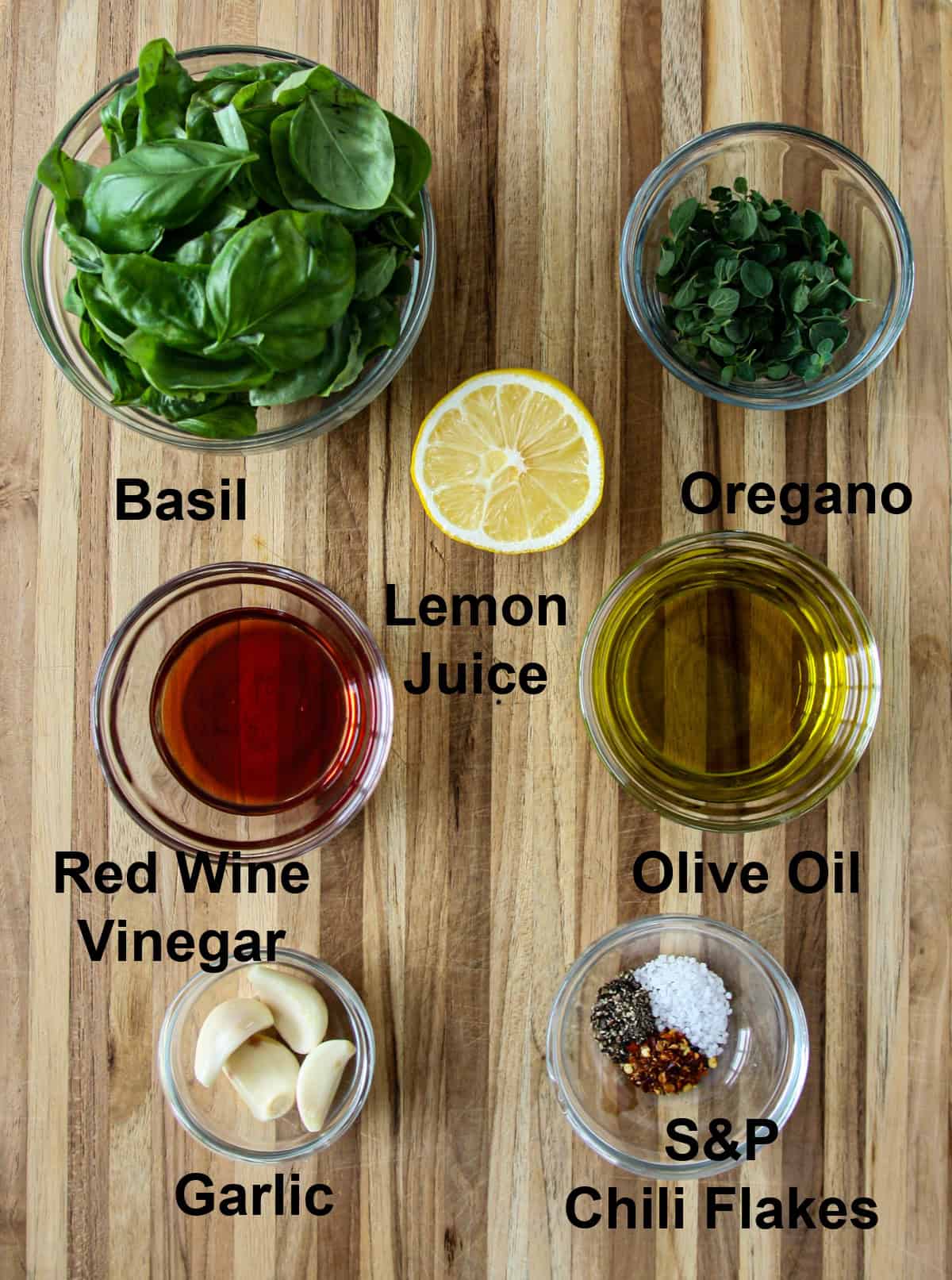
basil. Basil is the star of this recipe, and fresh basil is essential. There are many different types of basil, most of which are suitable for this chimichurri recipe. I am currently growing Genovese, or common sweet basil, in my garden. There’s also Thai basil, but this is the only variety I don’t recommend for this recipe. Save Thai basil’s strong, licorice-like flavor for Asian dishes, such as red Thai curry chicken soup. oregano. Use fresh oregano whenever possible. However, if fresh oregano is not available, you can substitute dried oregano. Use 2 teaspoons of dried oregano. olive oil. This recipe uses high quality extra virgin olive oil. red wine vinegar. This is the vinegar traditionally used in chimichurri. However, you can also substitute white wine vinegar, white balsamic vinegar, or apple cider vinegar. Lemon juice. Use freshly squeezed lemon juice to add a bright citrus flavor to your chimichurri sauce. Garlic. Fresh garlic is best, but you can also use pre-chopped jarred garlic. Red chili pepper flakes. A touch of spice makes this sauce perfect. Kosher salt and black pepper.
How to make, step by step
Place all ingredients in the bowl of a food processor or blender. Finely chop and pulse until the oil emulsifies.

variations
This recipe can also be used with many other fresh herbs. Try the combination of cilantro and parsley, which pairs well with Mexican and Thai dishes. Replace lemon juice with lime juice.
If you prefer more spice, add red pepper flakes. Or add fresh jalapenos or even spicier fresh chili peppers. You can also add a teaspoon of smoked paprika for a smoky flavor.
You can also add a quarter cup of diced red onion or shallots. I only recommend this if you are making your own sauce as a salsa. In a blender or food processor, the onions can overpower the flavor of the fresh herbs instead of enhancing them.
pro tips
Basil: This basil chimichurri uses freshly picked basil. If you can’t find it, buy fresh basil at your grocery store or farmers market. Look for bright green, vibrant leaves that are firm to the touch, not soft and wilted. Avoid leaves with black or brown spots. Basil should have a strong, aromatic aroma. Sauce consistency: If making this chimichurri sauce in a blender, immersion blender, or food processor, pulse until desired consistency. I like the sauce to be smooth yet textured. If you prefer, you can pulse longer until a thick sauce forms. You can also chop the ingredients by hand and combine them to create a thicker salsa. (or use a mortar and pestle). Seasoning: After the first pulse, taste and adjust seasonings (salt, pepper, chili flakes) to taste. Make ahead: You can make this recipe ahead of time and store it in an airtight container in the refrigerator. Olive oil will solidify a bit, so remove the chimichurri sauce from the refrigerator and let it come to room temperature before serving. To store: Homemade chimichurri can be stored in the refrigerator in an airtight container (Mason jars are best) for up to 4 days. To freeze: Freeze chimichurri in ice cube trays and transfer to resealable freezer bags. Can be frozen for up to 3 months. Thaw in the refrigerator. Keep in mind that freezing will change the texture and take away from the fresh taste of chimichurri. However, it is still a great choice for cooking and seasoning.
Proposal to offer
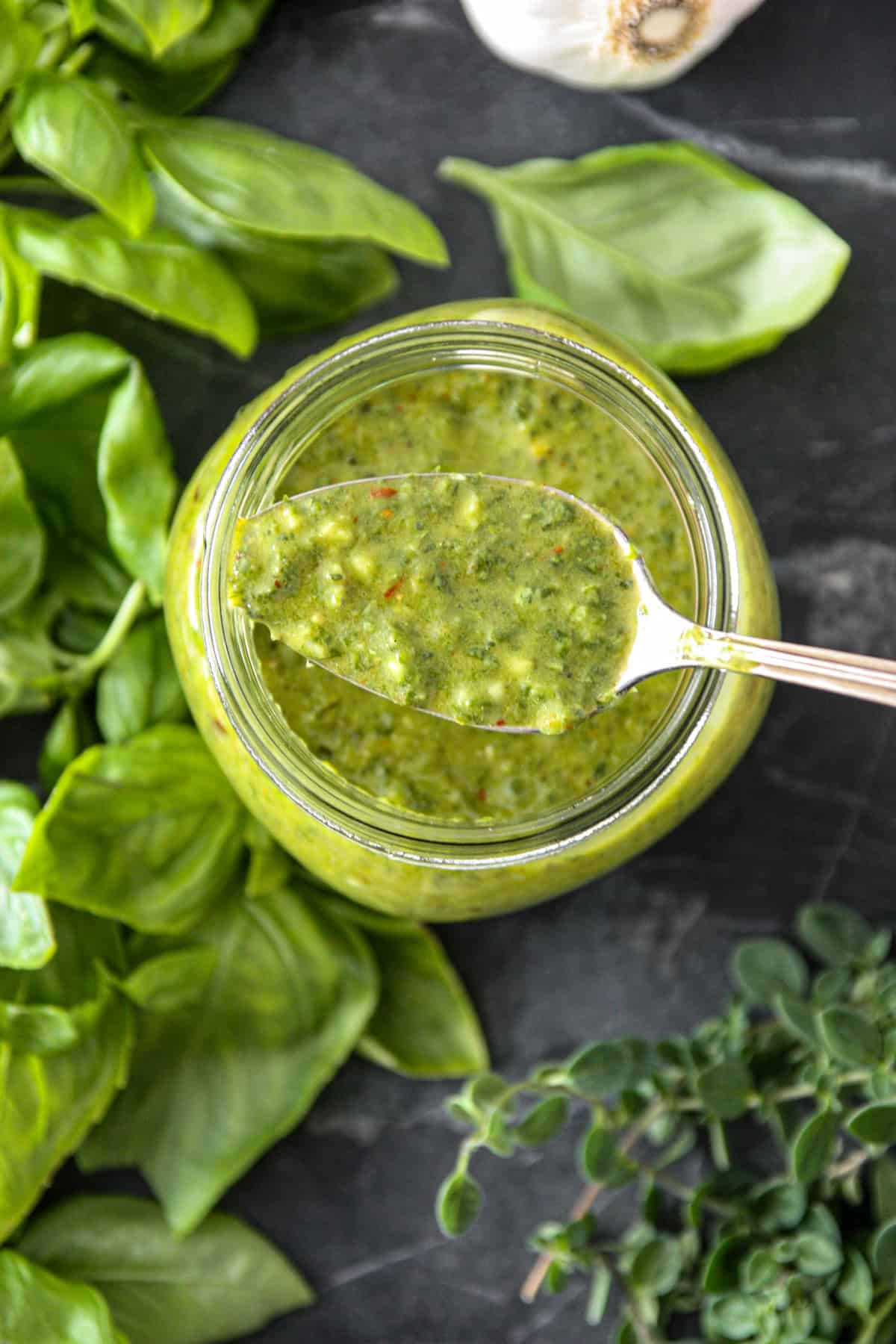
There are so many ways to use basil chimichurri! This air fryer is perfect for steaks such as flank steak, grilled chicken, especially grilled boneless chicken thighs, or grilled shrimp. It’s also great as an accompaniment to grilled salmon or black cod. Grilled pork tenderloin is always delicious.
Use basil chimichurri sauce as a salad dressing, taco topping, or pasta sauce. It’s also great as a dip for crispy bread. It also goes well with vegetables. It goes great with roasted vegetables and corn on the cob.
Did you make this recipe? Let us know how it turned out by leaving a rating in the comments section below. Have you made any changes? Please share. Feedback is important. Thank you for visiting our gourmet blog.
recipe
Would you like to save this recipe?
Please enter your email address. Send to your inbox. Plus, get great new recipes from me every week!
basil chimichurri
Basil chimichurri sauce is full of fresh, tangy flavor. A delicious twist on the classic Argentine parsley sauce. This versatile sauce with fresh basil, oregano, garlic, lemon, and vinegar is made in minutes.
print
pin
rate
Saving recipes Recipe saved!
cooking modePrevent the screen from going dark
Quantity: 8 2 tablespoons
calorie: 130kcal
Instructions
Place all ingredients in the bowl of a blender or food processor.
Scrape down the sides of the food processor and pulse until a fine consistency or desired consistency is reached.
Taste and adjust seasoning as needed.
Serve at room temperature.
Precautions
Basil: This basil chimichurri uses freshly picked basil. If you can’t find it, buy fresh basil at your grocery store or farmers market. Look for bright green, vibrant leaves that are firm to the touch, not soft and wilted. Avoid leaves with black or brown spots. Basil should have a strong, aromatic aroma. Sauce consistency: If making this chimichurri sauce in a blender, immersion blender, or food processor, pulse until desired consistency. I like the sauce to be smooth yet textured. If you prefer, you can pulse longer until a thick paste forms. You can also chop the ingredients by hand and combine them to create a thicker salsa. (or use a mortar and pestle). Seasoning: After the first pulse, taste and adjust seasonings (salt, pepper, chili flakes) to taste. Make ahead: You can make this recipe ahead of time and store it in an airtight container in the refrigerator. Olive oil will solidify a bit, so remove the chimichurri sauce from the refrigerator and let it come to room temperature before serving. To store: Homemade chimichurri can be stored in the refrigerator in an airtight container (Mason jars are best) for up to 4 days. To freeze: Freeze chimichurri in ice cube trays and transfer to resealable freezer bags. Can be frozen for up to 3 months. Thaw in the refrigerator. Keep in mind that freezing will change the texture and take away from the fresh taste of chimichurri. However, it is still a great choice for cooking and seasoning.
nutrition
Provided by: 1g | calorie: 130kcal | carbohydrates: 2g | protein: 0.5g | fat: 14g | Saturated fat: 2g | Polyunsaturated fats: 1g | Monounsaturated fats: 10g | sodium: 148mg | potassium: 52mg | fiber: 1g | sugar: 0.2g | Vitamin A: 362IU | Vitamin C: 3mg | calcium: 39mg | iron: 1mg
