


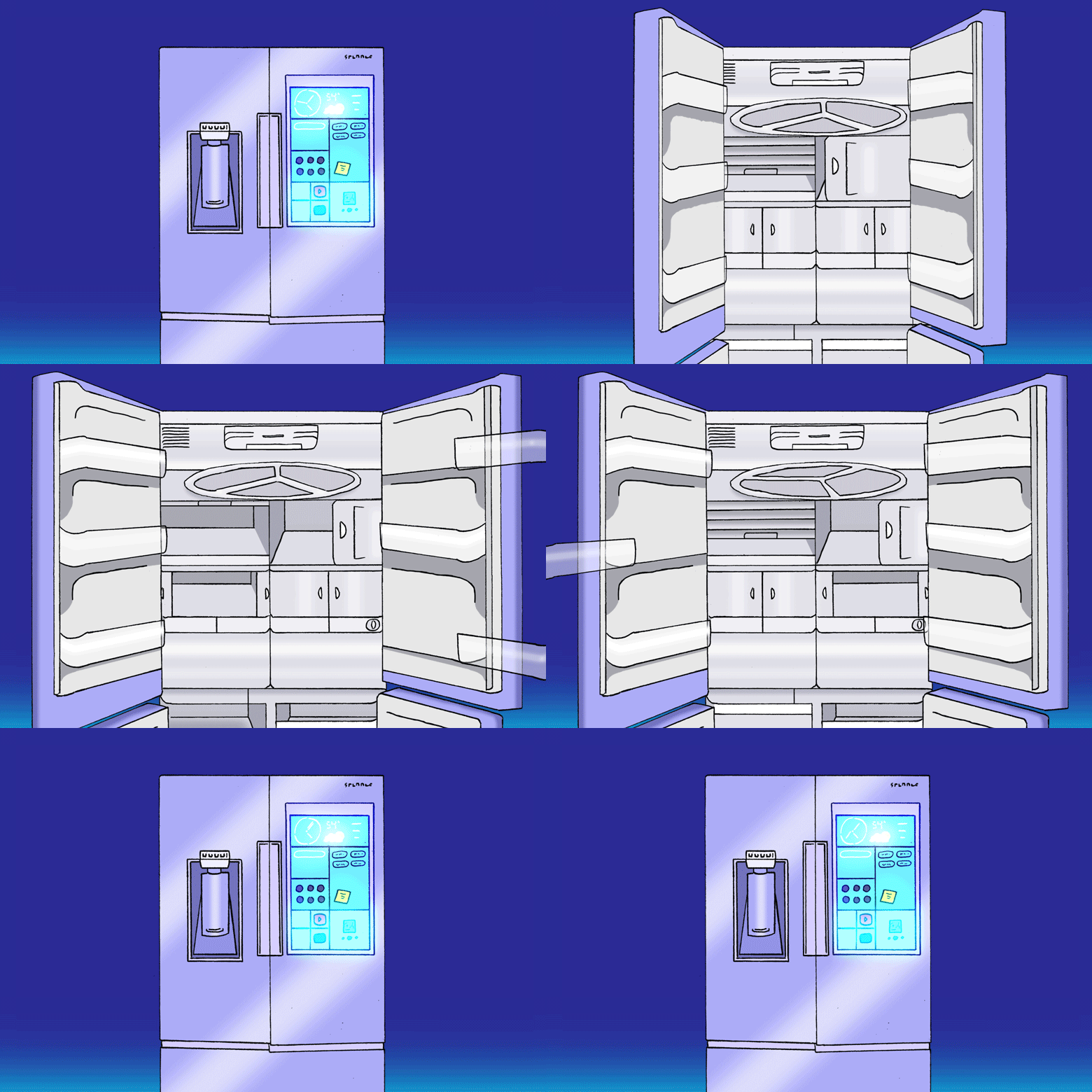
When we moved into our new home in June, we inherited a 3-year-old Fisher & Paykel bottom-mount refrigerator. If either door is left open too long, a protest beep will sound. It has quick freeze and bottle cooling features, which I haven’t used yet, but you’ll have plenty of time to complain about not having a dedicated cheese drawer. The freezer consists of a series of sliding drawers, including a shallow drawer for ice cube trays, but none of them are deep enough to store my typical artisanal sourdough bread. The adjustable shelf in the refrigerator door thankfully fits a gallon of milk, but it doesn’t have a guardrail tall enough to accommodate my ridiculous collection of condiments and pickles. The spill took up most of the top shelf, displacing space that would have held cans of soda, ready-to-drink cocktails, indie ginger beer, and coconut yogurt.
This is the fifth refrigerator I’ve used in the last few years, and none of them were purchased by me. Other than a 2016 custom GE French door refrigerator that had a built-in ice maker and filtered water dispenser in the house we lived in four years ago, this is the newest and most ingenious refrigerator. But lately, I’ve been missing the clean slate of Frigidaire’s 15-year-old white box in the apartment I’m renting in 2023. Is there a problem with me buying in bulk and hoarding seasonings? Or have modern refrigerators lost their plot?
“We use our refrigerators every day, so we’re constantly dealing with their limitations,” says Rachel Wharton, a writer who covers large kitchen appliances for Wirecutter, the New York Times’ product recommendation service. “Refrigerator designers cannot be 100% sure that they can create the perfect refrigerator.”
According to the magazine, refrigerators have come a long way since Americans first encountered iceboxes in the 1860s. The icebox was an insulated cabinet filled with blocks of ice that had to be replaced every week. Smithsonian National Museum of American History. According to Wharton, it’s one of the “most complex appliances” in our homes today, controlling precise temperature and humidity levels in multiple zones to keep food fresher for longer. Some even dispense filtered water (using a built-in flavor infuser) to create ice cubes or spheres. Some have modular storage configurations such as sliding and folding shelves and panels. Main door leading to a small compartment that allows consumers to access drinks and condiments without opening The whole refrigerator.
Some have built-in air filters to deodorize the interior, and some have a stainless steel finish that prevents fingerprints. Modern refrigerators are “smart” enough to enable remote monitoring and maintenance reminders, recognize our voices, display our personal calendars and shopping lists, and even adjust the temperature to our liking. Peek through inventory without opening the door, upload photo galleries, and even watch cooking videos on the built-in touchscreen. However, Wharton’s report did not reveal widespread consumer interest in smart refrigerators.
Recently, I took a photo of the chaotic interior of my fridge (hurray for daylight bright LEDs) and posted it on Instagram with the question, “Is anyone happy with their fridge layout?” Of the 20 replies to my DM, only two people praised the refrigerator/freezer layout, and one of them owned an older Whirlpool refrigerator.
“The people who sold our house took one of the refrigerators (that people were using) and installed it to organize the refrigerator.” Marie Tran McCaslin, a general surgeon in Fresno, California, complained: She owns a deep Dacor French door refrigerator that she used three years ago. Tran McCaslin is famous on TikTok tendency Decorate the inside of your refrigerator like you would any other room in your home. Consider arranging asparagus in beautiful colored glass vases with flashing LED candlelight, or displaying ceramic sculptures or framed art alongside fluted orange bowls and fancy milk and juice pitchers.
“I really think it’s there for the look,” she added. “I can’t reach the top shelf. Where do I put my 800 sauces for cooking? And why does Tillamook ice cream barely fit in my freezer drawer?”
A small number of respondents said they had purchased and installed their own turntables to assist with organizing. One person made cardboard dividers for their condiment collection to separate hot sauce from mayonnaise and mustard. Another woman reported using one of her humidity-controlled produce drawers to store her large collection of nonperishable foods. The two confessed to buying a spare mini-fridge just for drinks.
“We use refrigerators every day, so we are constantly pushing the limits of refrigerators.”
Belfast-based chef Rory Gorman suggested I go down the rabbit hole of 1950s and 60s fridge algorithms. turntable style metal shelf With removable glass door compartmenthe covetably called it “chef porn.” (I eventually learned that if manufacturers continued to use these materials, refrigerators would become unaffordable for most consumers and woefully inefficient by today’s energy standards.)
I asked Dean Brindle, head of product development at LG Electronics, to explain the discrepancy in storage satisfaction.
“Food storage is very personal and constantly changing,” he answered. “Families with young children have different needs than those living alone.”
It turns out that refrigerator manufacturers spend a lot of time trying to meet the delicate demands of the widest possible range of people. This is done through focus groups, in-market research, and first-hand product reviews, by scraping the web for user reviews and comments, and by collecting usage data and behavior from smart products and in-home observations.
Consumers are also asking more questions about their refrigerators than they did 10 years ago. We now expect them to play an active role in preserving fresh food for long periods of time, assisting with meal planning and reducing food waste, a trend that has only increased since the COVID-19 pandemic as more people cook at home on a regular basis, Brindle said. We buy more food in bulk and freeze it for longer periods of time. And we’re “obsessed” with the drink, Wharton says.
They also want a chic refrigerator that “blends in seamlessly.” In the kitchen scenery, and Adapt it to our personal style.” Andy Spanier Executive Director of Refrigerated Product Management for GE Appliances. Some of that comes from influencer culture; refrigerator aesthetics It began to be heavily incorporated into design in the 1950s.
“A lot of people are either influencers or trying to be influencers, so their refrigerators and freezers need to look better, primarily for social media, or even to be the star of a fridgescape,” Wharton added. Fortunately, better indoor lighting can also help you find things.
We now expect them to play an active role in preserving fresh food for long periods of time, supporting meal planning and reducing food waste.
In some cases, consumer demands may appear to contradict each other. Since then Filtered water and ice dispenser now a standard feature on new modelsAccording to the Consumer Electronics Manufacturers Association, a 2022 survey found that 44% of consumers said they don’t want to see them on the exterior of their refrigerator. GE responded by sacrificing a few inches of valuable storage space by installing a removable filtered water pitcher that automatically refills the door of the Profile French Door refrigerator.
Also, you may not be able to meet negotiation deadlines. LG prioritizes adjustable shelving, including shelves that fold and slide to create height for tall or awkward items, adjustable height bins and shelves, door-in-door configurations for quick access to the items you use most, and sliding freezer drawers that make it easy to see what’s inside. More modular and flexible than 50’s built-in turntables chef porn The refrigerator, Brindle told me. The problem is that customers don’t necessarily take advantage of that workability.
“User reviews sometimes point out that, despite the flexibility built into these models, such as sliding shelves and extra-tall door bins to accommodate the majority of real-world use cases, certain configurations don’t suit their exact needs,” he said, noting the persistent desire for higher storage space.
The answer to our myriad storage complaints may lie in countering our own hoarding tendencies. Perhaps, if we have a say, or more likely, by purchasing a smaller, less deep refrigerator. (The refrigerator also doesn’t last as long as it used to due to tolls.) complex system Wirecutter research shows that consumer happiness levels plateau fairly quickly when refrigerator space exceeds 20 cubic feet.
“If you have a smaller refrigerator, you’re less likely to have too many condiments and lose track of where they are,” says Wharton. I cringed at the thought of miniature jars of expired Bonne Maman advent calendar jam and Bubbies spicy sauerkraut sitting in the back of my fridge.
Wharton is also a big proponent of purchasing and installing our own Lazy Susans (in fact, she owns two) to overcome our lack of self-control. Modern refrigerator manufacturers have probably been able to do that for too long. In the process, we may regain our appreciation for this appliance. Despite all the real and perceived flaws of this appliance, it still makes your life much easier.
“Refrigerators can be frustrating and don’t perfectly satisfy our various needs,” she said. “But it’s really nice to keep food cold. We don’t even have to bring in big blocks of ice like our ancestors and mothers did.”
