


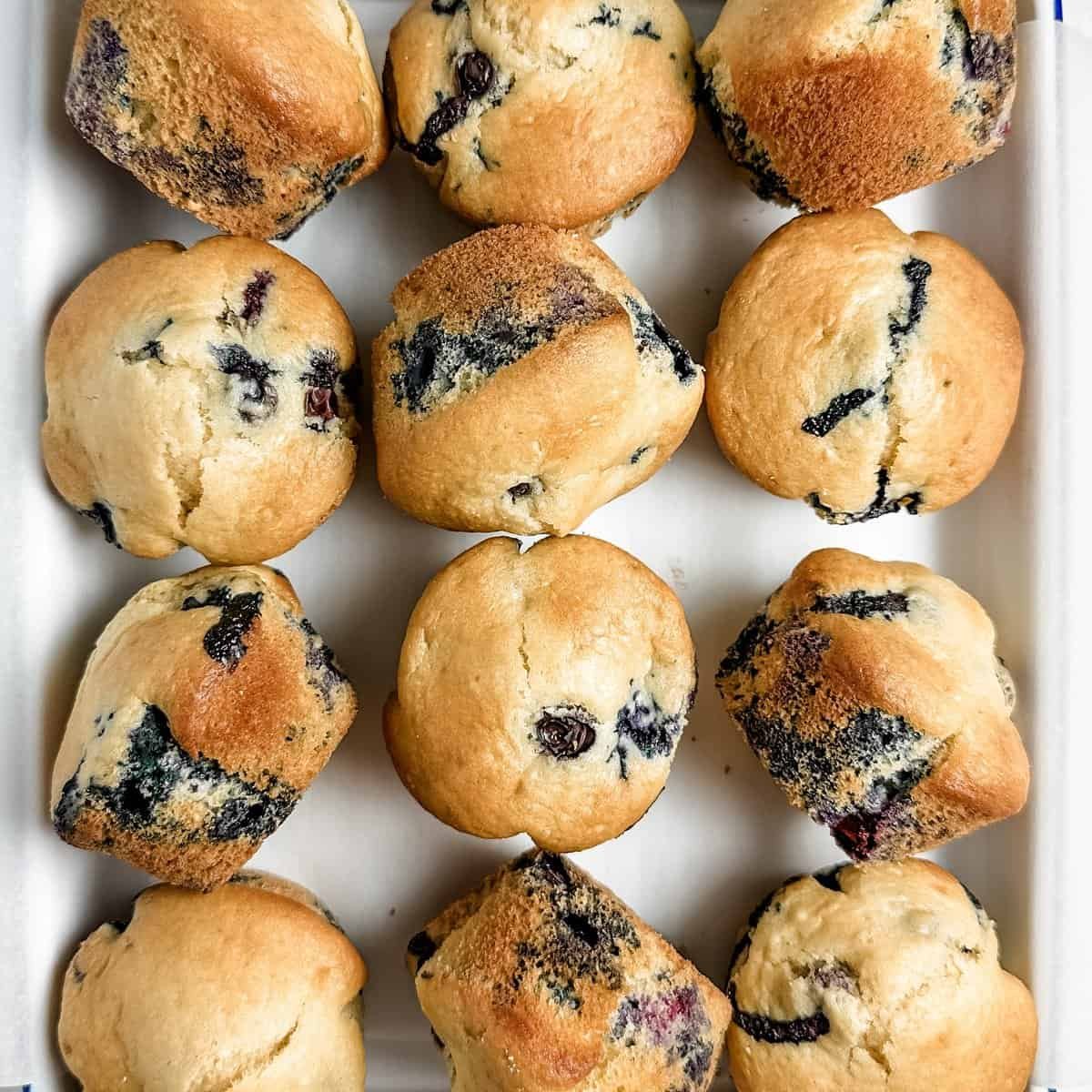
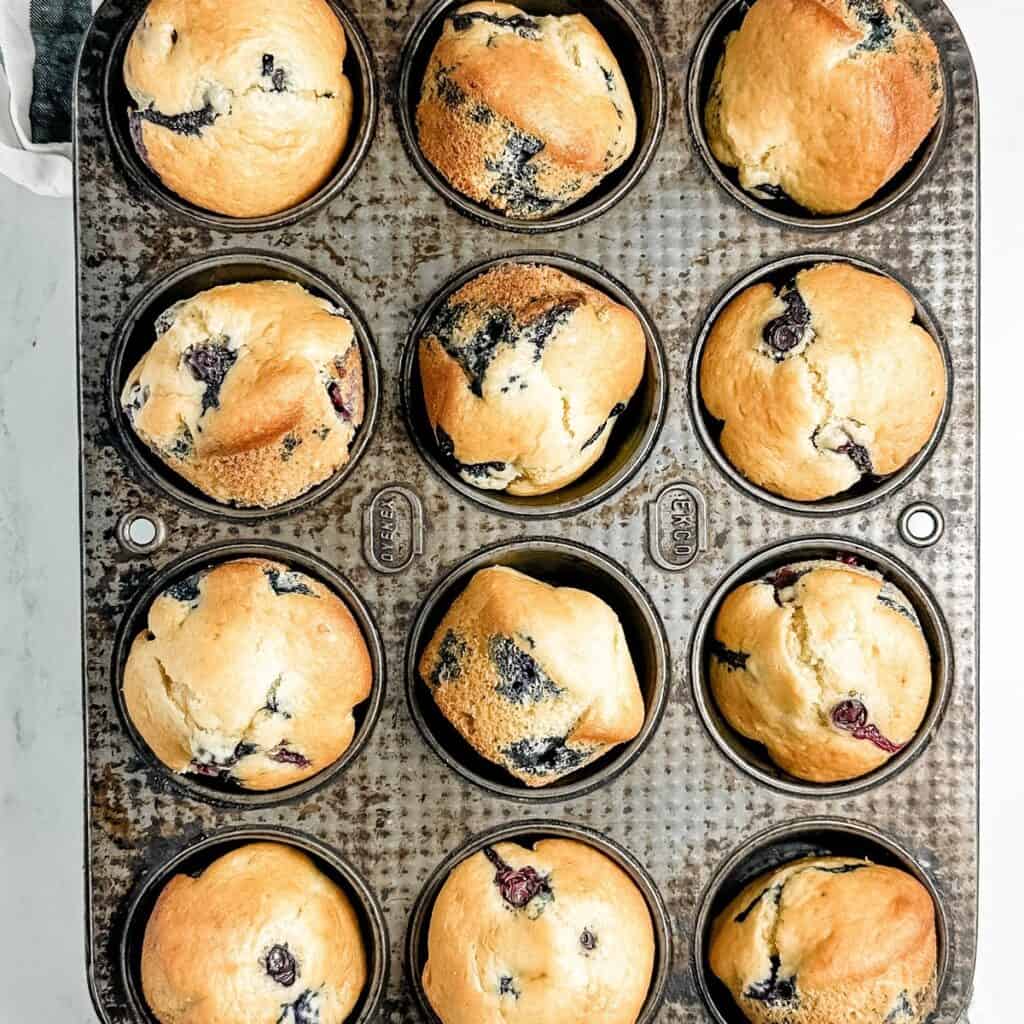
These dairy-free blueberry muffins are incredibly easy to make, moist, packed with fresh berries, and stay soft for days thanks to the apple cider vinegar.
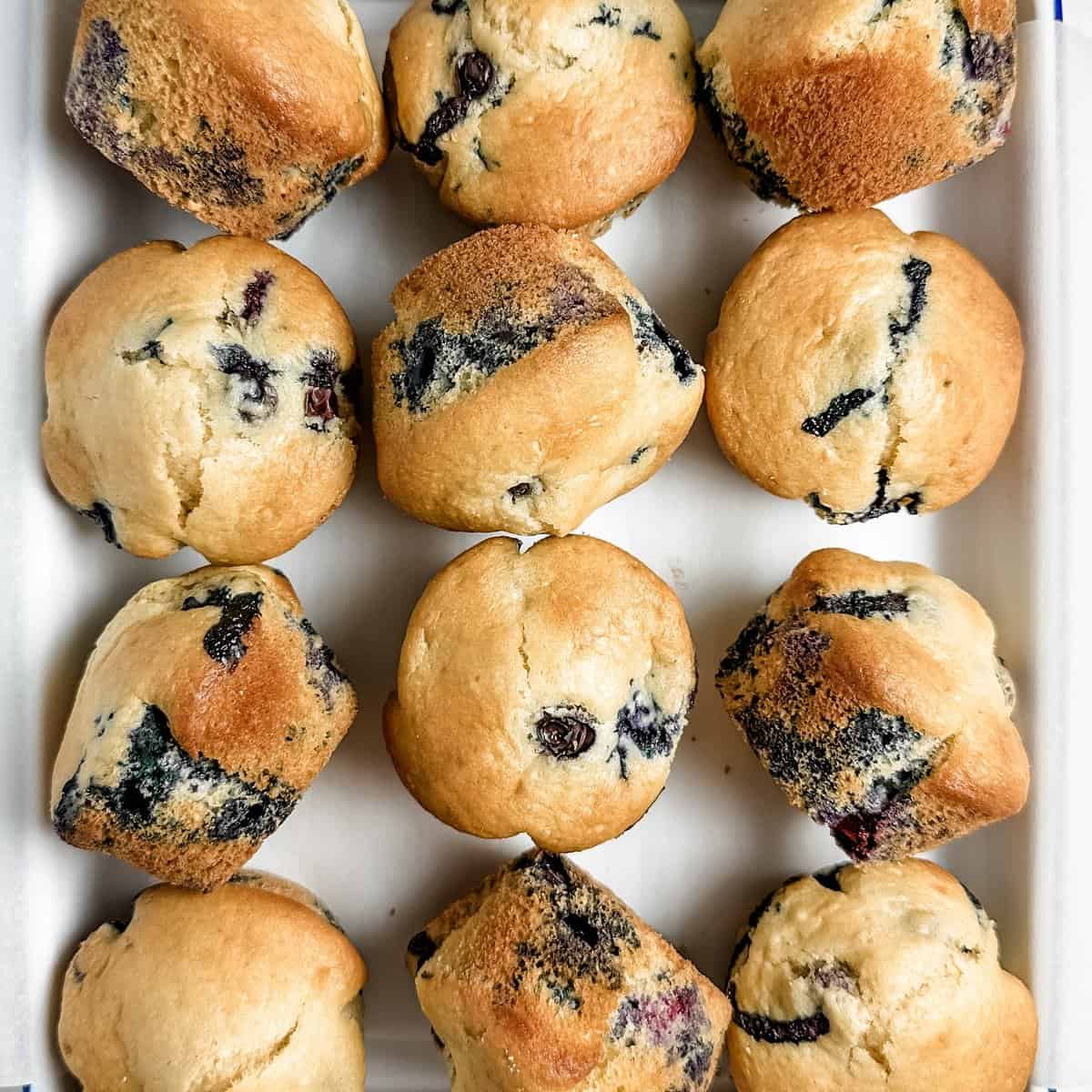
I’ve been making gluten-free blueberry muffins for years, and the biggest complaint I hear about dairy-free ones is that they dry out quickly.
The trick to keeping the dough soft for days is to use apple cider vinegar in the dough. This recipe does just that. Not only does it react with the baking soda to create extra lift and softness, but it also helps the muffins retain moisture for longer. We’re talking about three-day-old muffins that still have that fresh-baked flavor.
If you like simple vegan baking like this, you’ll want to try my vegan lemon poppy seed scones and chickpea flour pancakes next.
Why This Dairy-Free Blueberry Muffin Recipe Works
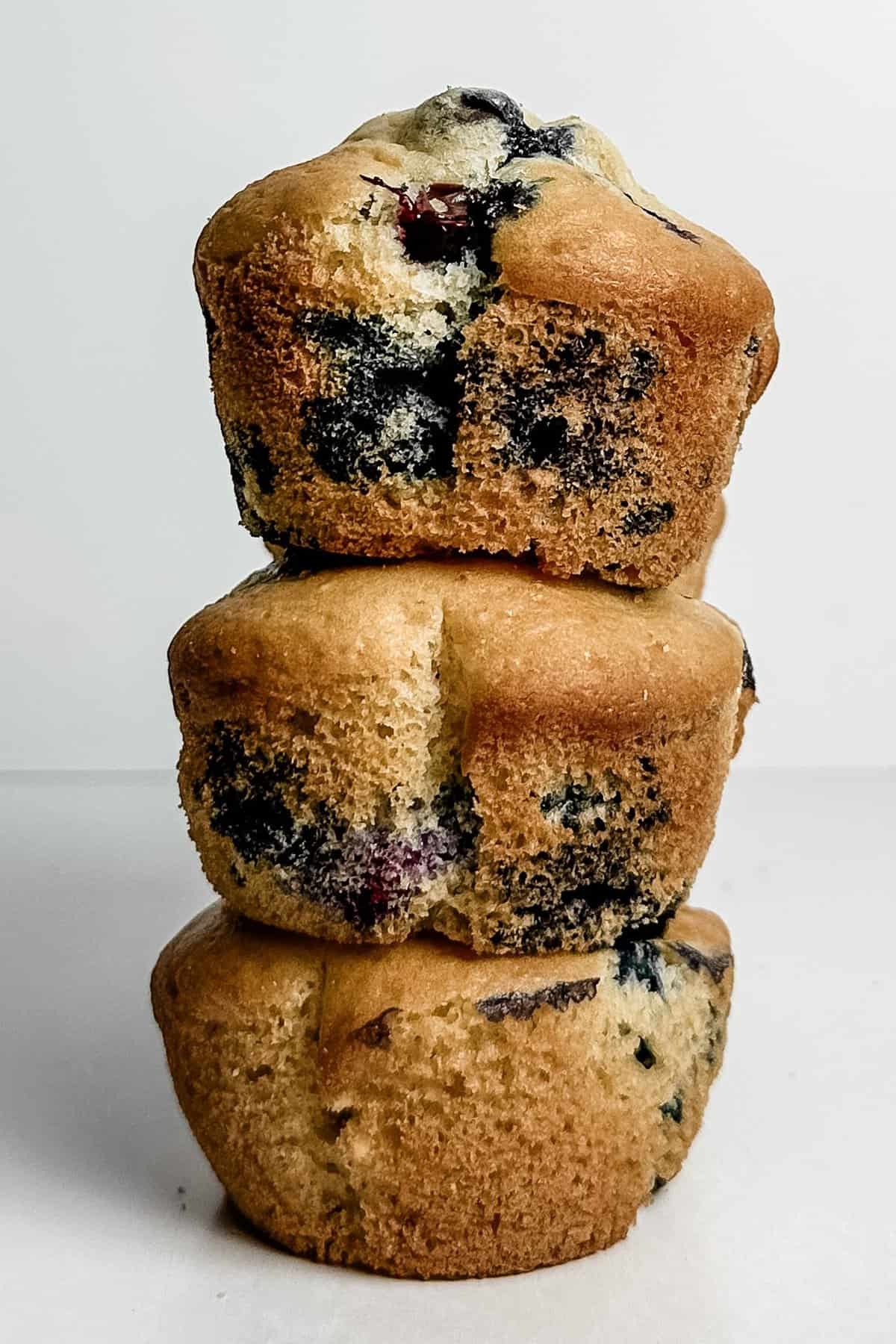
Apple cider vinegar creates a vegan buttermilk effect when combined with almond milk. It solidifies slightly while adding subtle complexity.
I tested a batch using lemon juice, white vinegar, and apple cider vinegar. I was fascinated by the flavor and texture of apple cider vinegar. It is gentler and leaves no aftertaste.
Ingredient memo
See recipe card below for exact quantities and complete instructions.
All-purpose flour: Use regular all-purpose flour or swap it out for a 1:1 gluten-free flour blend. For more gluten-free baking inspiration, check out my gluten-free potluck ideas.
Almond milk: You can use any unsweetened dairy-free milk. Add oat milk to thicken it a bit and soy milk to add protein. Avoid canned coconut milk as it is too thick.
Apple cider vinegar: This is non-negotiable. Activates the baking soda and creates soft, moist crumbs. All you need is 1 tablespoon.
Vegetable oil: Neutral oils like canola oil or avocado oil are best. Coconut oil can slightly thicken solid muffins.
Fresh blueberries: Fresh berries hold their shape better than frozen ones. If using frozen, don’t thaw it first. When it thaws, it may melt into the dough. Curious about storing berries? We’ve written a complete guide to how long blueberries last.
How to make dairy-free blueberry muffins
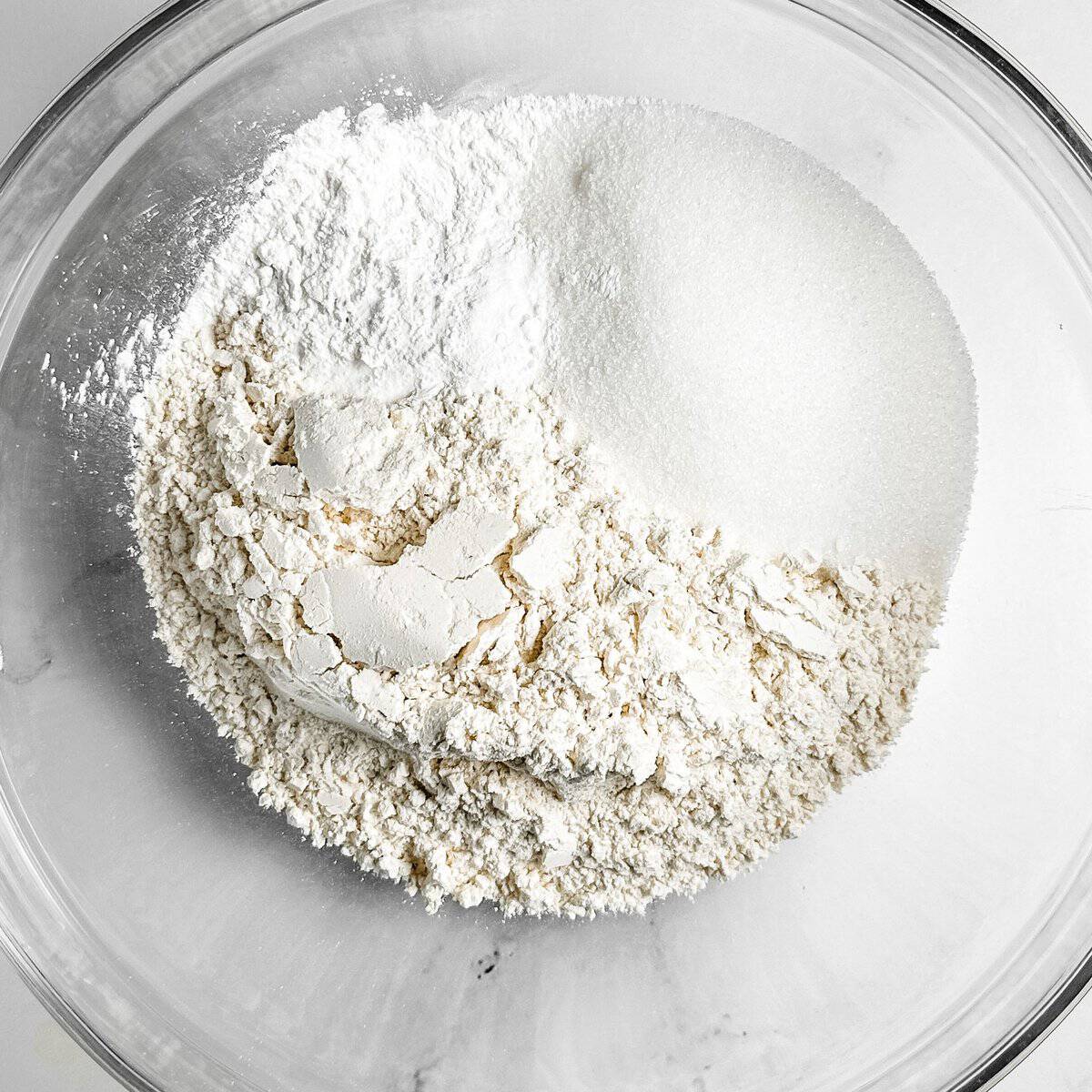
Step 1: Mix dry ingredients. Preheat oven to 375°F and line muffin tins with paper liners. In a large bowl, combine flour, sugar, baking powder, baking soda, and salt.
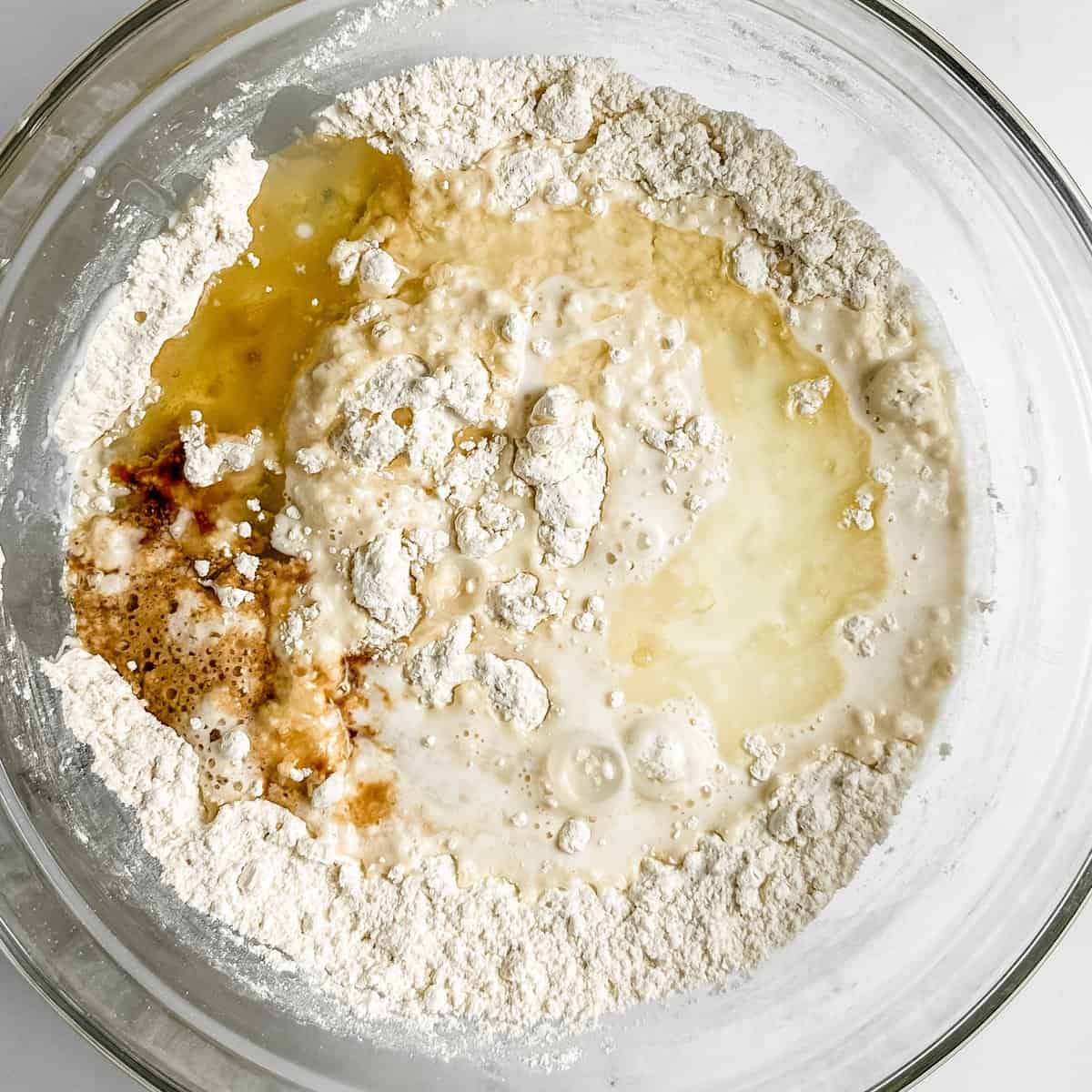
Step 2: Mix wet ingredients together. In a separate bowl, combine almond milk, vegetable oil, apple cider vinegar, and vanilla extract. Pour into the dry ingredients and stir until just combined. The dough should be slightly lumpy.
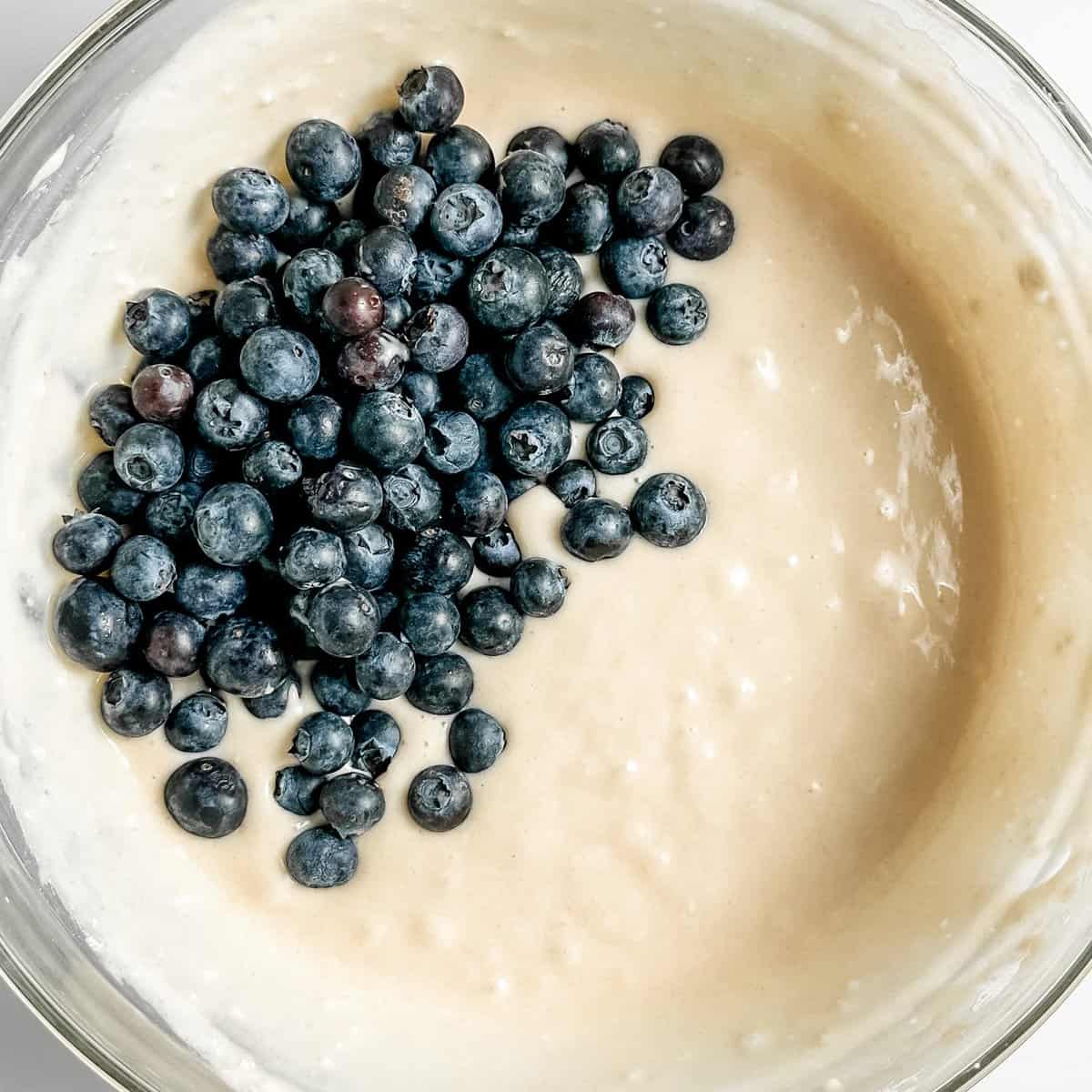
Step 3: Add blueberries. Gently fold the fresh blueberries into the batter. Be careful not to grind or overmix at this stage.
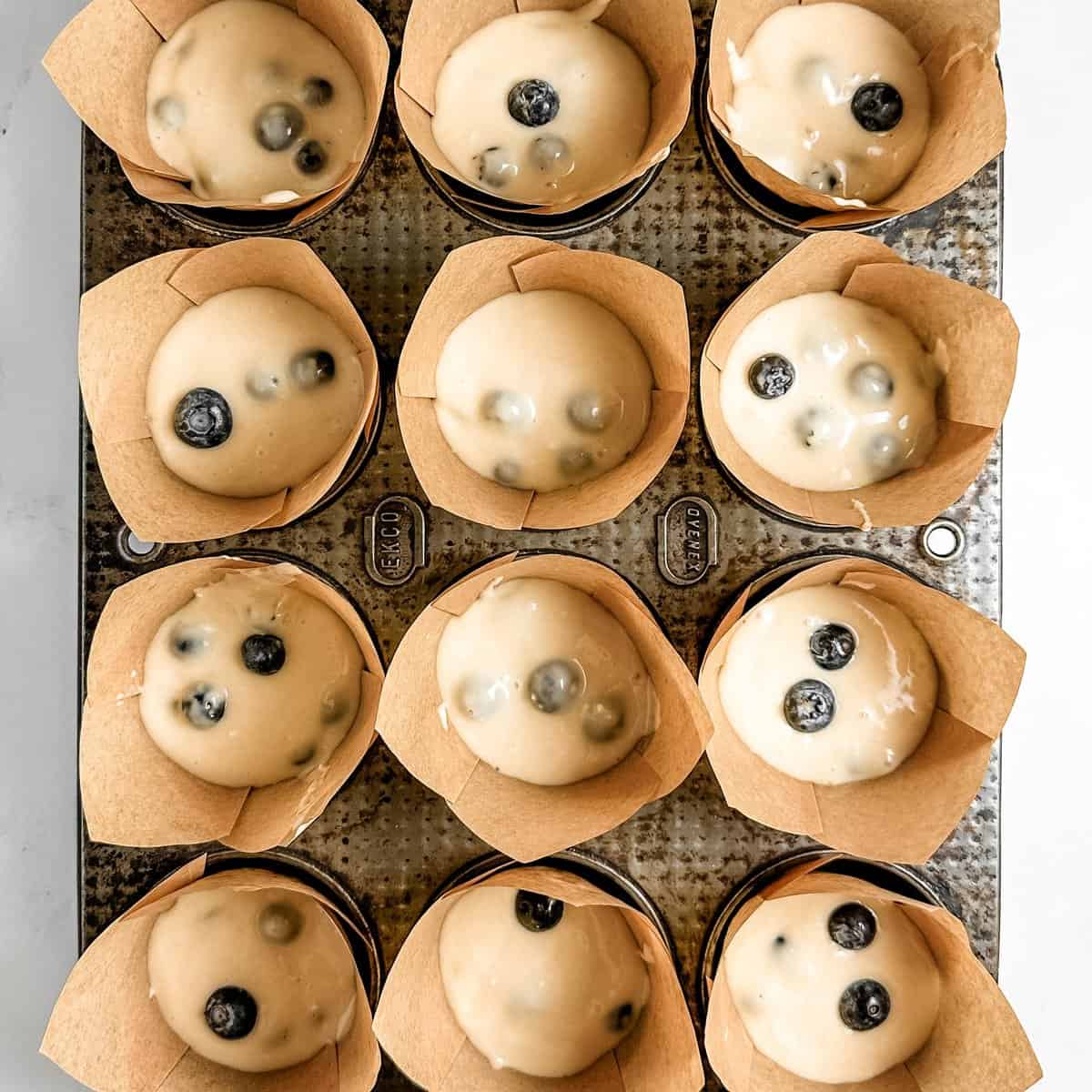
Step 4: Fill muffin tins. Divide the batter evenly between the muffin cups, filling each cup about two-thirds full. This gives it room to dome beautifully.
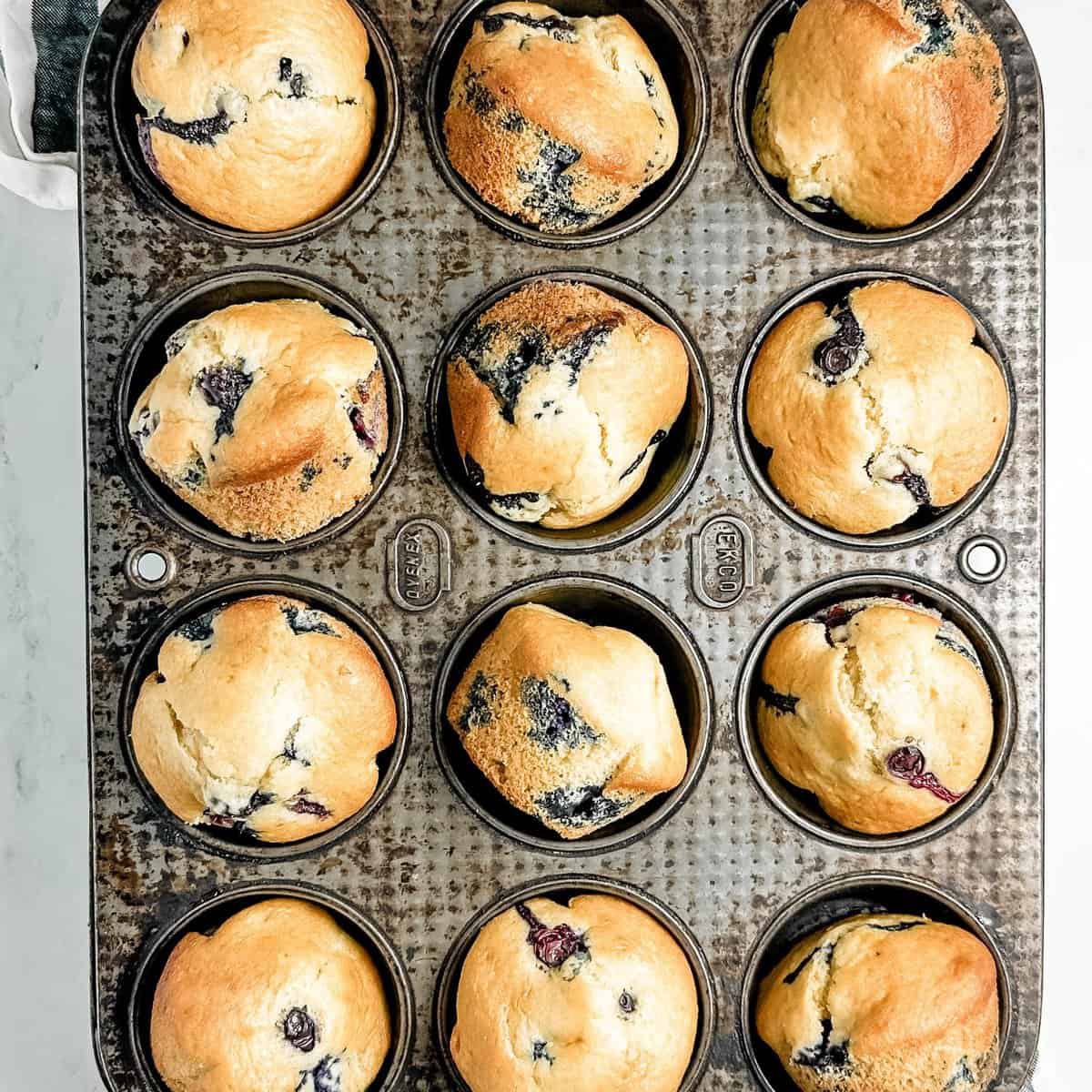
Step 5: Bake until golden brown. Bake for 18-22 minutes or until a toothpick inserted in the center comes out clean. Let cool in the pan for 5 minutes, then transfer to a wire rack.
Tips for making perfect muffins every time
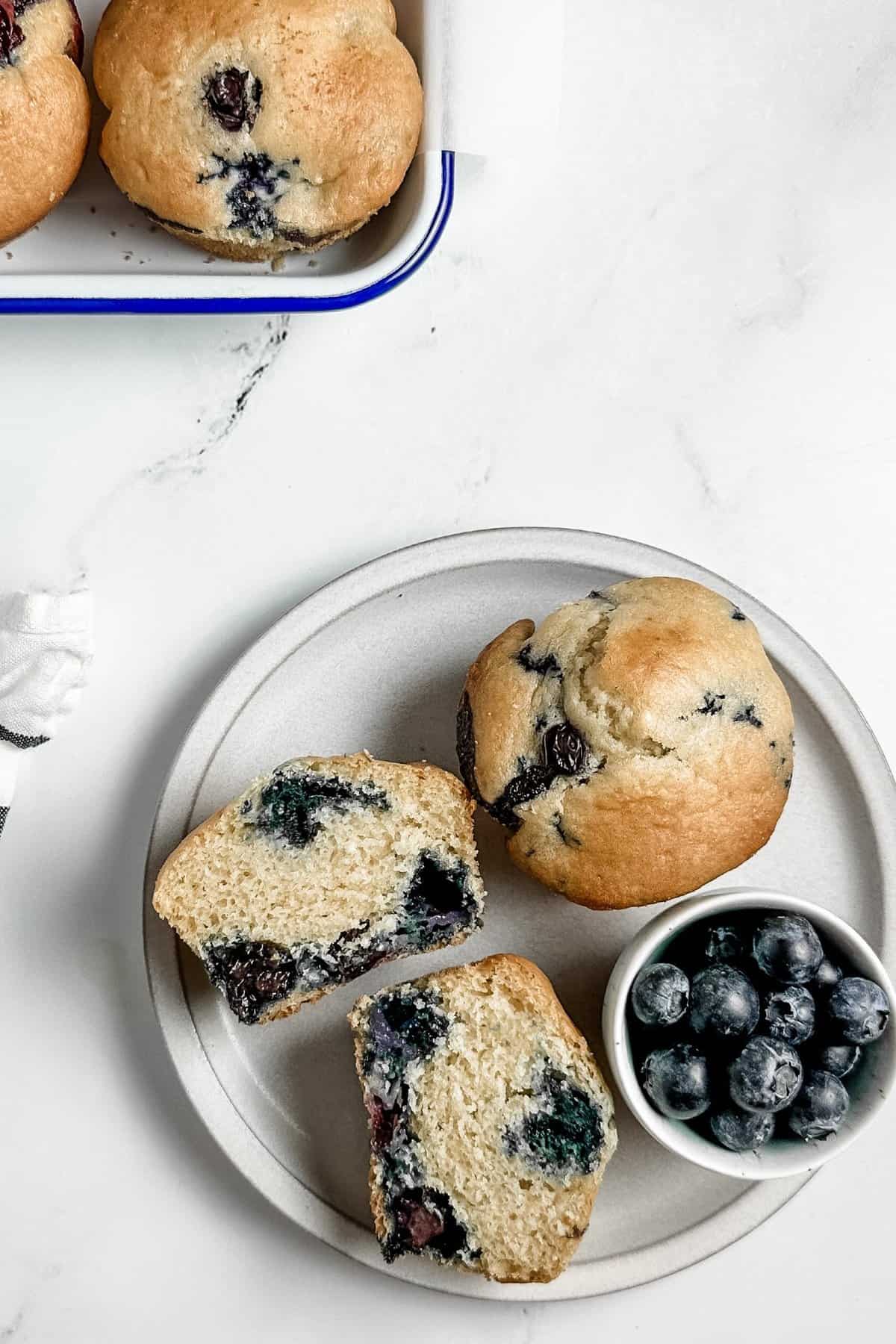
Do not overmix the dough. This is the number one mistake I see. Mix until flour is just incorporated. Some lumps are perfectly fine and actually desirable.
Use room temperature ingredients. If you use cold almond milk, the oil may curdle slightly and the texture may become uneven. Let stand for 10 minutes before mixing in milk.
First, mix the blueberries with the flour. This will prevent it from sinking to the bottom of the muffin. A light coating (about 1 teaspoon of flour) is sufficient.
Storage method
Room temperature: Store in an airtight container for up to 3 days. Thanks to the trick of apple cider vinegar, it will remain soft.
Refrigerator: For long-term storage, refrigerate for up to 5 days. Bring to room temperature or warm slightly before serving.
Freezer: Freeze in a single layer and then transfer to freezer bags for up to 3 months. Thaw at room temperature overnight or in the microwave for 30 seconds.
FAQ
Yes, but don’t unzip it first. Add frozen berries directly to the dough to prevent bleeding. You may need to add 2-3 minutes to the baking time.
In a pinch, white vinegar or lemon juice will come in handy. Although the texture is similar, apple cider vinegar has a better flavor. It is not recommended to omit the acid completely.
Usually caused by overmixing. Mix wet and dry ingredients until just combined. Also, make sure that your baking powder and baking soda are not expired.
If you prefer less sweet muffins, you can reduce the sugar to 1/3 cup. The texture remains the same. Coconut sugar can also be used as a 1:1 substitute.
The recipe calls for almond milk, but you can easily make it nut-free by using oat milk or soy milk instead. Everything else in the recipe is naturally nut-free.
See more blueberry recipes
Do you like blueberries? Try other recipes using this antioxidant-rich berry:
See more dairy-free baking recipes
If you’re baking dairy-free, you’ll also love these other sweet treats:
recipe card
Quantity: 12 muffin
Instructions
Preheat oven to 375°F (190°C). Line a muffin tin with paper liners or lightly grease muffin cups.
In a large mixing bowl, combine flour, granulated sugar, baking powder, baking soda, and salt.
In a separate bowl, combine almond milk, vegetable oil, apple cider vinegar, and vanilla extract. Whisk until well mixed.
Pour the wet ingredients into the dry ingredients. Stir until just combined, being careful not to overmix. The dough will be a little lumpy.
Mix gently, being careful not to break the blueberries.
Spoon batter into prepared muffin tins, filling each cup about two-thirds full.
Bake in the preheated oven for 18 to 22 minutes, or until a toothpick inserted into the center of a muffin comes out clean.
Remove the muffins from the oven and let them cool in the tin for a few minutes. Then transfer to a wire rack to cool completely.
Precautions
Enjoy dairy-free blueberry muffins as a delicious breakfast or snack. For a gluten-free version, use your favorite gluten-free flour blend in place of all-purpose flour.
©See, learn, and eat. All content and images are copyrighted and may not be used or republished without prior permission.
