


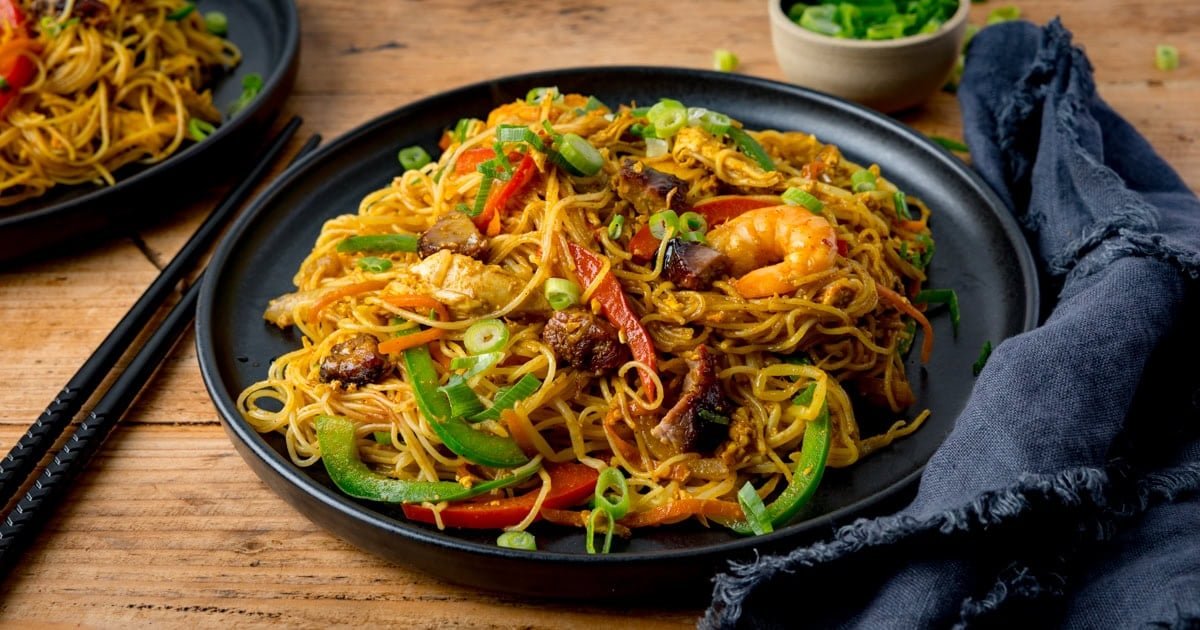
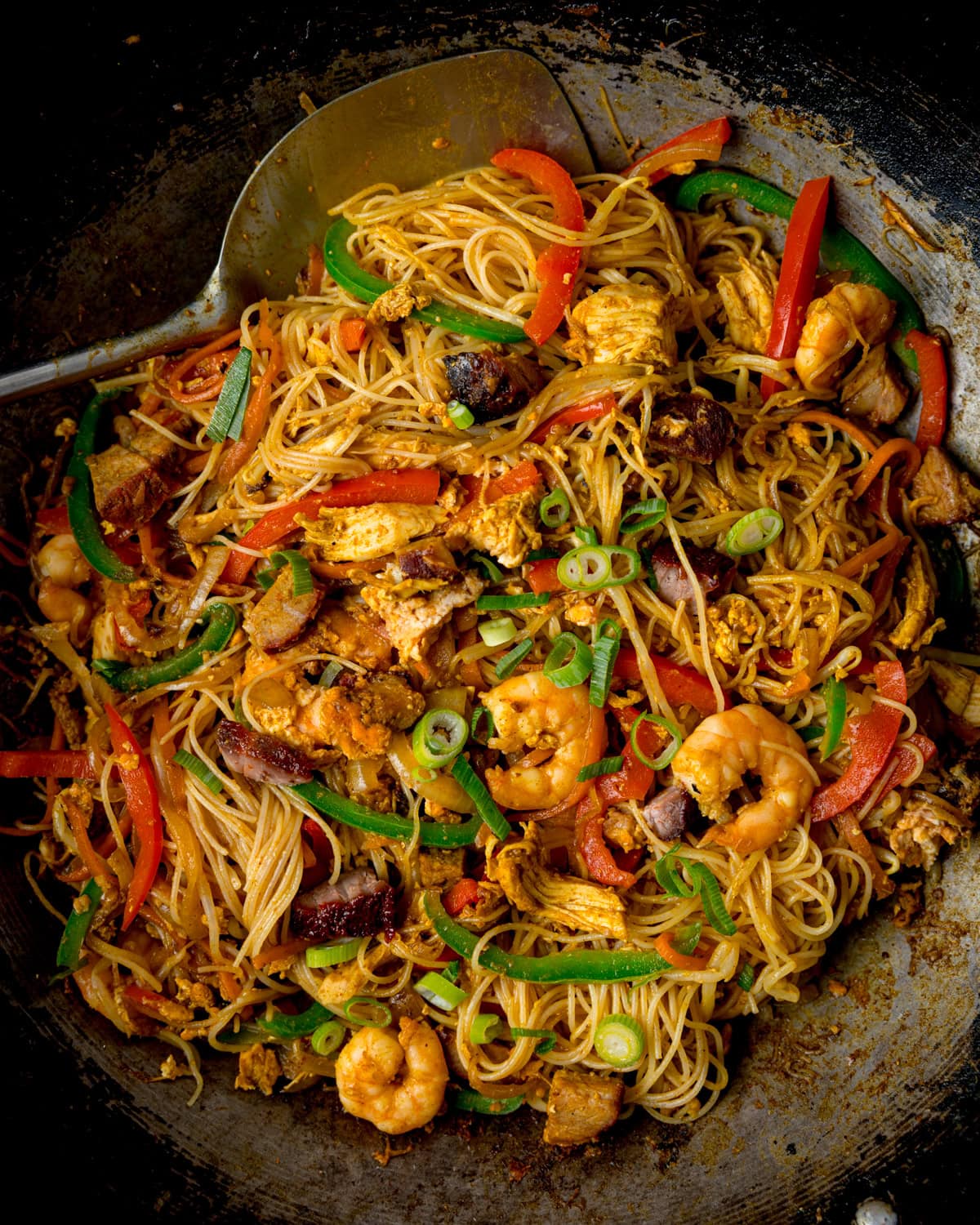
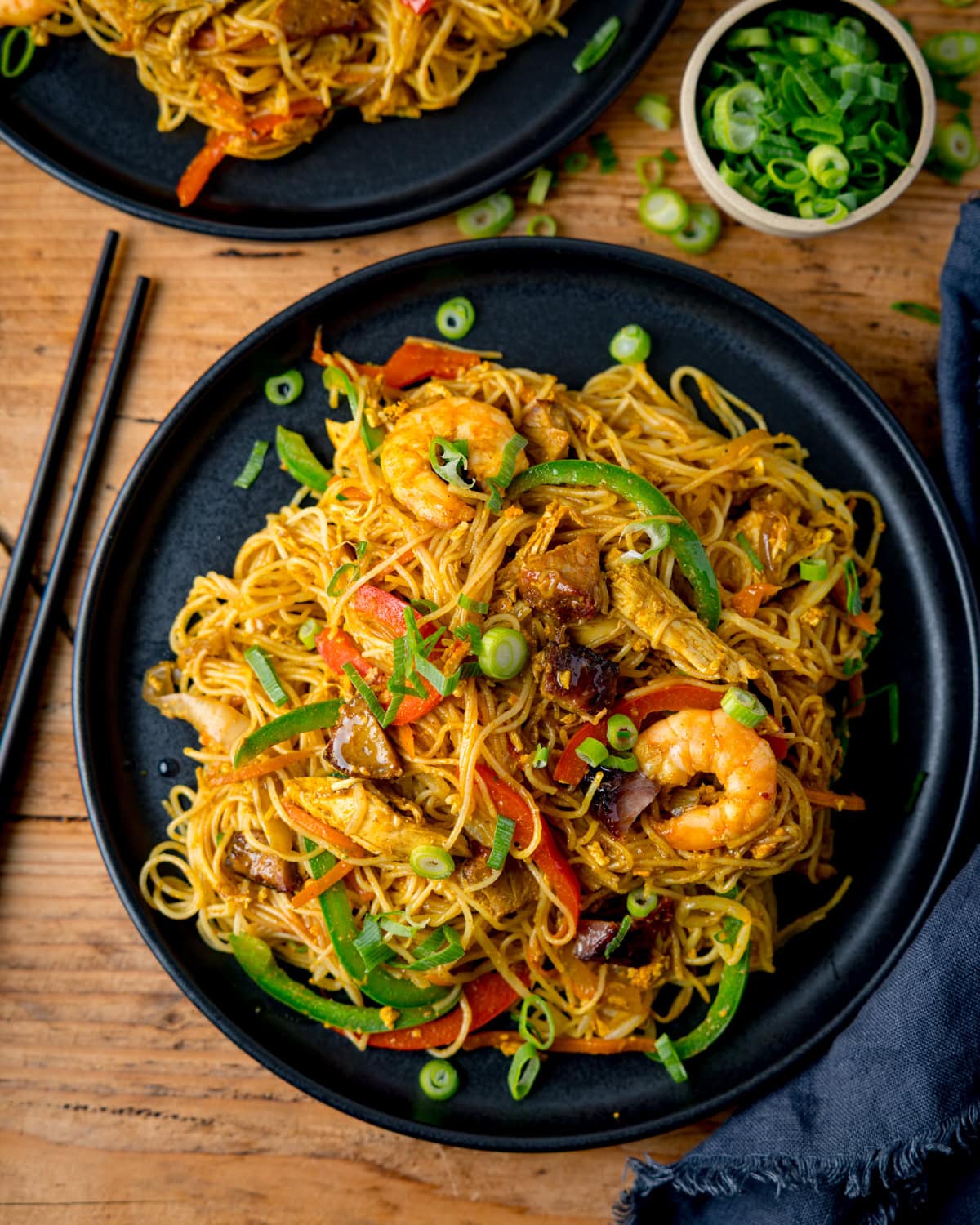
These Singapore noodles are a proper stir-fry, thin rice noodles tossed with shrimp, chicken, chashu, egg, crunchy vegetables, and a flavorful curry sauce. It’s one of those dishes that looks like there’s a lot going on, but once everything is prepped and laid out in the wok, it’s ready in no time. The noodles are light and chewy, the vegetables have a little crunch, and the sauce coats everything without being wet or heavy.
nicky’s memo

I can always find an excuse to add a portion of Singapore Noodles to my takeaway order. Sometimes I use it as a main or as a side if I’m feeling a little greedy.
Thin rice noodles soaked in a warm, slightly spicy curry flavor, filled with forkfuls of juicy shrimp, tender chicken, and tiny chashu nuggets.
The most important ingredient in Singapore noodles is, of course, the chashu pork. When I make noodles or fried rice, I make a large amount and freeze it.
But don’t worry. You can also use commercially available ones. See my notes on the recipe card for this.
Once the wok is heated, this dish comes together in less than 15 minutes, so prepare everything in advance.
📋 Singapore Noodle Ingredients
***Full recipe with detailed measurements is provided in the recipe card below***
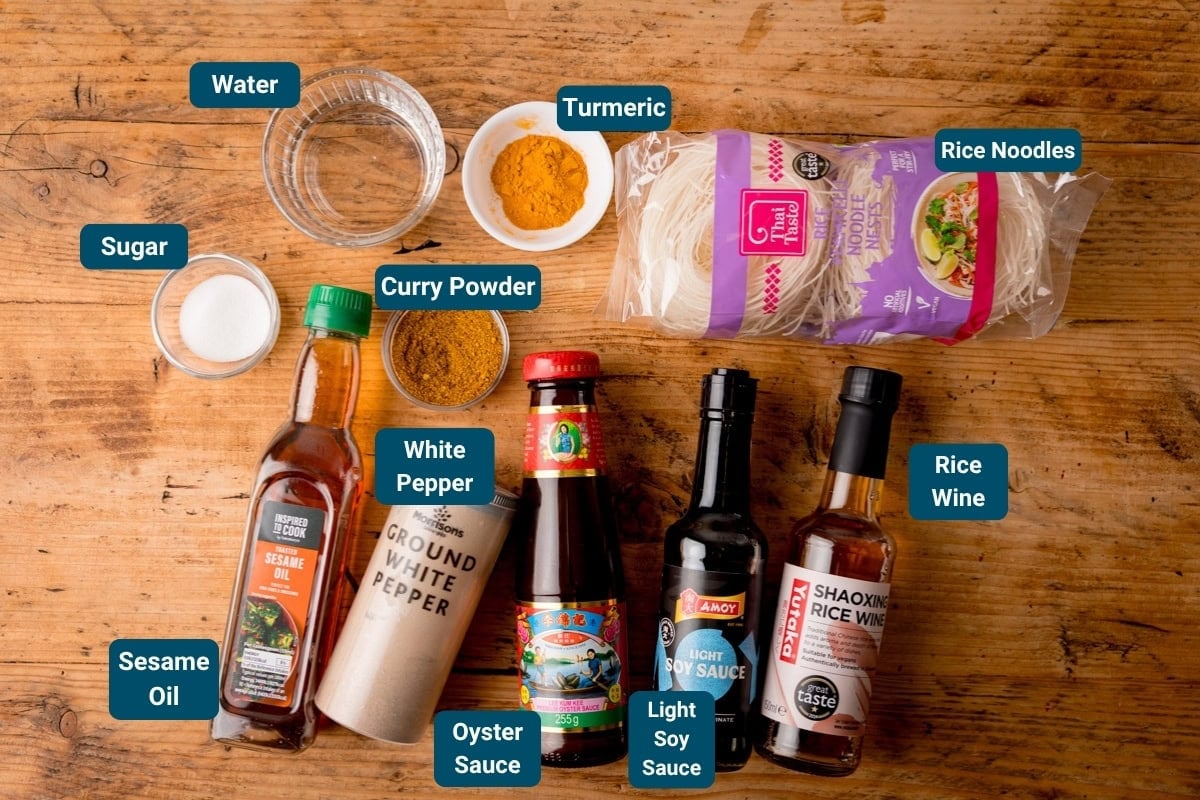
noodles and sauce
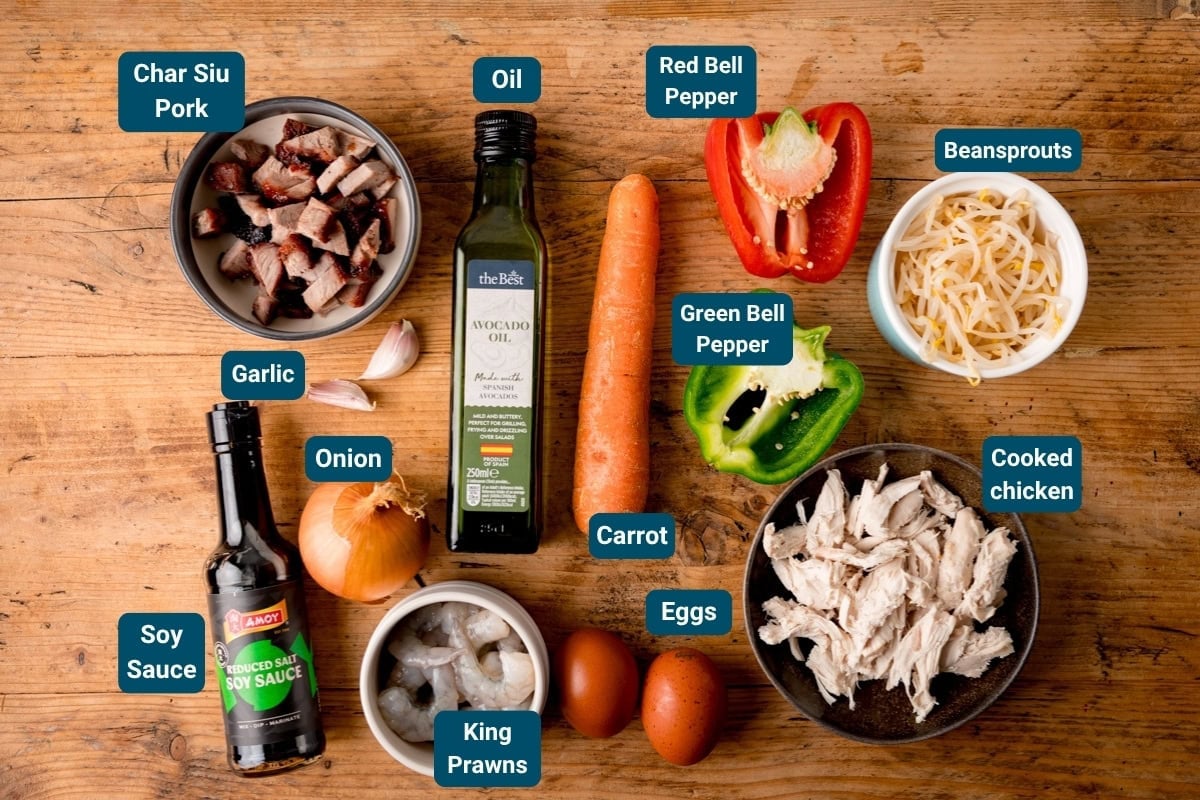
stir-fry ingredients
Points to note about chashu
Char siu is a traditional ingredient for Singapore noodles. If you make it yourself, it will take a little longer (1.5 hours of marinating + cooking). I will post my family’s favorite char siu recipe 👇
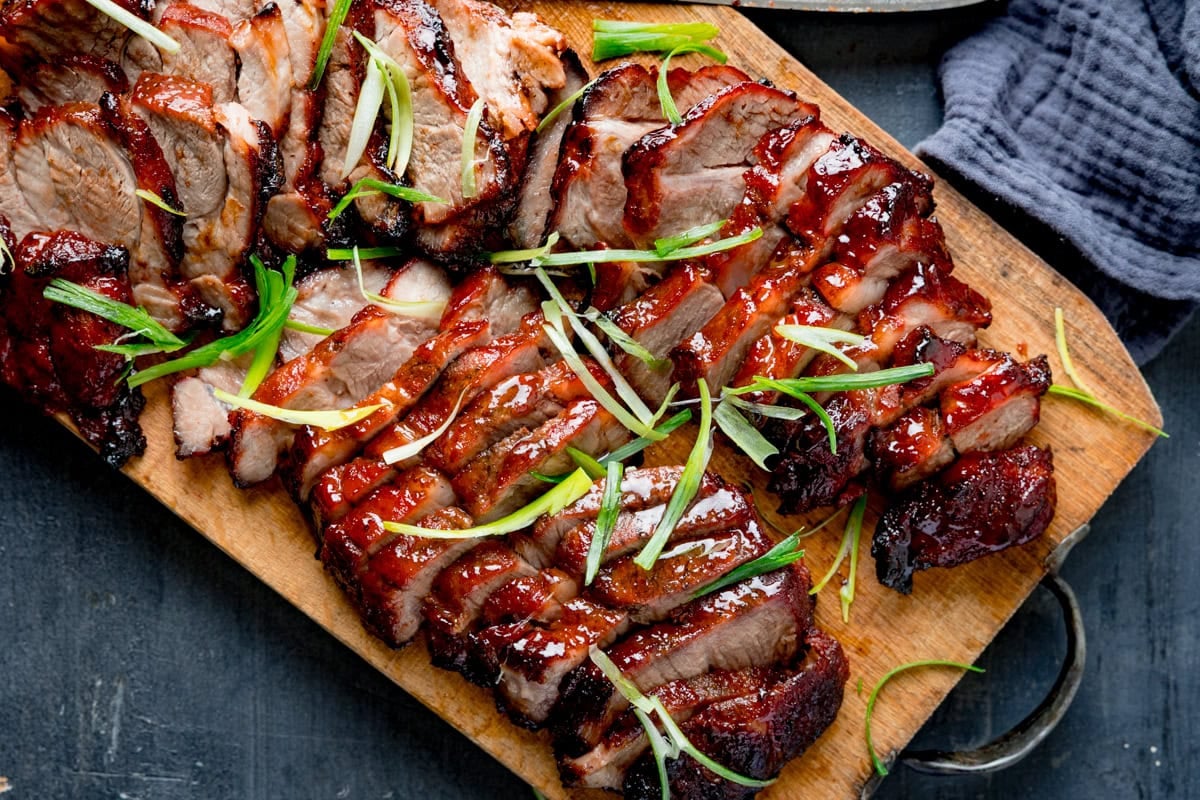
Alternatively, you can buy ready-made char siew from large Asian supermarkets. UK supermarkets: M&S, Ocado and sometimes in Iceland too.
If it’s not found, you can replace it with:
Lap Cheong (Sweet and Savory Salted Chinese Sausage) – Finely chop and stir-fry before adding. Chop the cooked roasted pork belly or shred the remaining pork (mix it with a little barbecue sauce for a sweet and savory flavor). Cooked Chinese Food/Sweet Chili/Sweet Smoky Chicken Breast.
shortened recipe
***Full recipe with detailed instructions is in the recipe card below***
Soak the noodles in freshly boiled water, drain, rinse with cold water, and toss with sesame oil. Mix sauce ingredients. Stir-fry the vegetables and add the garlic, shrimp, chicken, and chashu. Add eggs and soy sauce and stir. Add bean sprouts, noodles, and sauce. Stir together until heated through.
recipe tips
Before you start cooking, chop everything, mix and prepare. The stir-fry moves quickly, so you don’t have to leave the noodles sitting in the wok while you search for the oyster sauce. If it’s easier, use tongs or a spatula. Tongs help lift and separate noodles, and spatulas help move meat and vegetables around the wok.
Curry powder and turmeric give the noodles their signature golden color and mild spice flavor. This version is savory with the chashu, slightly smoky and sweet, and has plenty of texture from the bean sprouts, peppers, carrots, and scallions.
Pin it now to find it later
pin
🍽️What to serve it with?
Singapore noodles are hearty enough to be eaten on their own, especially since shrimp, chicken, chashu pork, egg, and vegetables are all mixed together.
If you’re making a larger spread to take home, the following are great additions:
Make-ahead and leftover guide
Leftovers: Singapore noodles are best served fresh, with chewy rice noodles, fragrant curry spice, and caramelized edges of chashu pork. However, you can also make it ahead of time (or save leftovers) and reheat if needed. For the best texture, we recommend cooking them thoroughly, letting them cool immediately, then storing them in an airtight container in the refrigerator for up to 2 days. Add water or stock to a wok or frying pan with hot oil and reheat to loosen the noodles. Freezing: You can also freeze leftover noodles, but freezing and reheating may make the rice noodles a little soft and crumbly. The taste is still good, but the texture is not as springy as freshly boiled noodles. It’s perfectly fine for a quick freezer dinner, but not ideal for a dinner party. Cook, cool immediately, and freeze in airtight containers (ideally portioned into portions to speed up thawing). Thaw in the refrigerator overnight and reheat as above.
📺 See how to make
Place the noodles in a large bowl and cover with freshly boiled water. Let stand for 2 minutes, then use tongs (or chopsticks) to separate the noodles slightly.
Dried vermicelli rice noodles 180 g (6.5 oz)
Place in a colander and run cold water to stop the cooking process.
Sprinkle with sesame oil and mix. Set aside.
1 teaspoon sesame oil
Mix the sauce ingredients and set aside.
1 tablespoon medium curry powder 1/2 teaspoon white pepper, 1 teaspoon sugar, 2 tablespoons soy sauce, 2 tablespoons oyster sauce, 1 tablespoon of sake, 1 teaspoon sesame oil, 2 tablespoons water, 1 teaspoon turmeric
Heat oil in a wok over medium heat.
2 tablespoons oil
Add onions, peppers, and carrots and sauté, moving constantly around the wok with a spatula, until lightly softened, 2 to 3 minutes.
1 onion (small) 1/2 red bell pepper, 1/2 green pepper, 1 medium carrot
Add garlic and cook for 30 seconds.
2 cloves of garlic
Add shrimp and cook until gray to pink, 2 to 3 minutes (if using pre-cooked shrimp, just cook for 2 minutes).
12 shrimp
Add the cooked chicken and chashu and stir-fry for 2 minutes.
100 g (3.5 oz) cooked chicken breast, 100 g (3.5 oz) cooked pork fillet
Move everything to the side of the wok, crack the egg into the gap, and add the soy sauce. Fry the eggs, stirring constantly with a spatula, until scrambled.
2 eggs, 1 teaspoon soy sauce
Add the bean sprouts and drained vermicelli and pour over the sauce.
100 g (3.5 oz) fresh bean sprouts
Increase the heat to high and fry everything for 4-5 minutes until heated through (keep everything moving with a spatula).
Divide among plates and sprinkle with chopped green onions before serving.
Chopped green onions (green onions)
Char siu
Char siu is a traditional ingredient for Singapore noodles. If you make it yourself, it will take a little longer (1.5 hours of marinating + cooking). Introducing my family’s favorite char siu recipe.
– Alternatively, you can buy ready-made char siu from large Asian supermarkets. UK supermarkets: M&S, Ocado and sometimes in Iceland too.
If it’s not found, you can replace it with:
– Lap Chong (Sweet and Savory Salted Chinese Sausage) – Finely chopped and stir-fried before adding
– Chopped cooked roasted pork belly or leftover shredded pork (mixed with a little BBQ sauce for a sweet and savory flavor)
– Shredded cooked Chinese/sweet chili/sweet smoky chicken breast
– Shredded cooked Chinese duck
– Chopped ham (not a sweet, smoky, savory flavor or a substitute for char siew, but it’s a meat substitute for the chicken and shrimp you already have, and it tastes pretty good too.)
Nutritional information is approximate per serving (this recipe serves 4 people)
calorie: 445kcal | carbohydrates: 54g | protein: twenty twog | fat: 15g | Saturated fat: 3g | Polyunsaturated fats: 4g | Monounsaturated fats: 7g | Trans fat: 0.04g | cholesterol: 152mg | sodium: 1299mg | fiber: 3g | sugar: 9g
Nutritional information is automatically calculated and should only be used as a rough guide.
This Singapore Noodles recipe was first posted in June 2026.
🥡 Other noodle recipes
Some of the links in this post may be affiliate links. This means that if you purchase a product, I receive a small commission (at no extra cost to you). Thank you very much if you purchase it! That’s what helps us keep Kitchen Sanctuary running. The nutritional information provided is approximate and may vary depending on several factors. Please see our Terms of Use for more information.
(Tag translation) Chicken
