


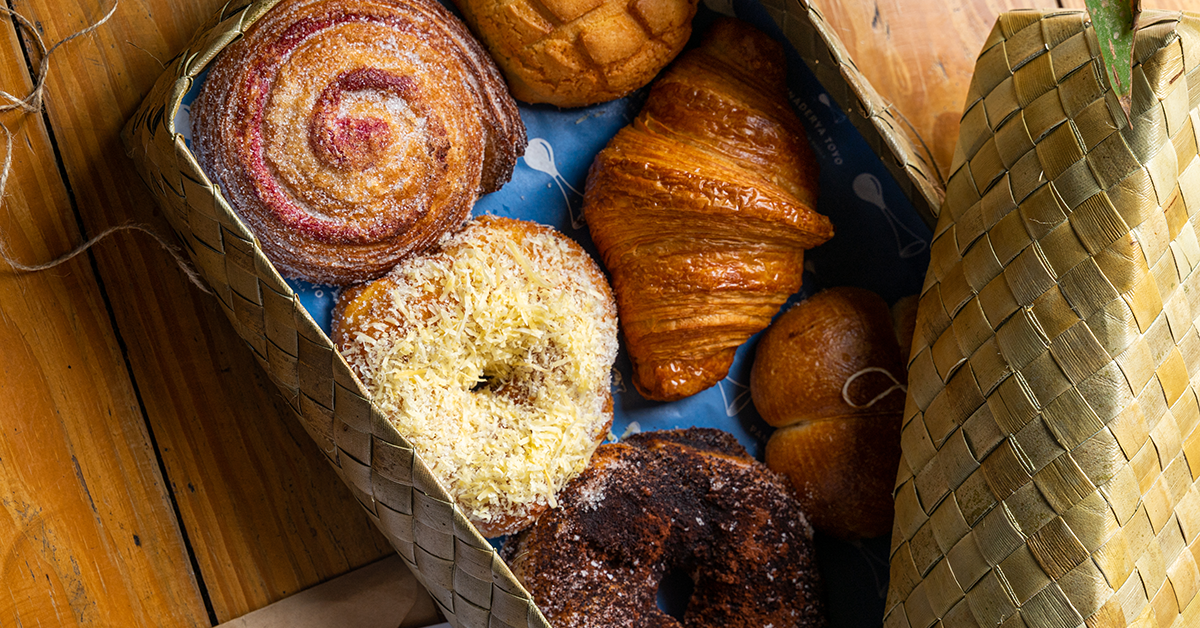
Wherever there are Filipinos, there is always a Filipino bakery. In the Philippines, panaderiyas are an essential food source for the daily working class, providing people with pandesal, their daily bread. Mild, slightly sweet, crumb-coated yeast rolls, best dipped in hot coffee for breakfast or tsokolat (hot chocolate) for merienda, are the lifeblood of these establishments. In Little Manilas, from Dubai to Daly City, Calif., mom-and-pop bakeries and big chains like Goldilocks are essential mainstays, serving immigrants with staples like pandesal and light, fluffy mammon, pan de coco with sweet shredded coconut meat and golden-fried dipstick.
Ever since Spanish colonists brought bread to the Philippines in the 16th century, generations of bakers have created their own basic bakery staples, such as airy mammon and empanadas stuffed with tender shredded meats and vegetables. Today, a young generation of bakers and entrepreneurs are shaping a uniquely Filipino bread-making tradition, pushing not only the boundaries of taste and form, but also the meaning of bread-making. ““Authentic Filipinos” in the United States and abroad.
In the past year, several Filipino cafes have opened to much fanfare in California, New York, New Jersey, and Chicago. Bakery fanatics wait in line that stretches out the door and winds around the block. Jumping out of the pastry case? A brioche donut with a beautiful, glossy leche flan embedded in the center of a New York kola, a longanisa-stuffed croissant from Chicago’s Del Sur Bakery, a chicken sisig kolache from Jersey City’s Panaderilla Salvaje, and a purple uberate wash it all down.
Panaderiya Salvaje’s Dinakdakan Pot Pie. Photo: Ian Somoza
“I think the term ‘Filipino bakery’ has changed from the idea of a traditional bakery to what ‘Filipino’ means to you and to me,” says Justin Relias, pastry chef and owner of Del Sur, a Midwestern Filipino bakery in Chicago. “Del Sur is directly inspired by my immigrant story.”
Lelias was born and raised in the Zamboanga del Sur region of the southern Philippines and moved to Chicago with his family when he was 14 years old. Having been taught to assimilate into American culture, he questioned whether he was truly Filipino or American. Del Sur is his way of saying that it’s actually okay to be both. His menu includes a bay leaf adobo brownie with soy caramel and black pepper, a turrón-inspired caramelized banana danish, and a bright pandan basque cheesecake.
A big factor that inspired Lelias to open the bakery was the current thriving Filipino food scene in the United States, especially in Chicago, which is home to the Filipino community. for over 120 years It’s home to Casama, the world’s first Michelin-starred Filipino restaurant and bakery, opened in 2020 by Timothy Flores and Jeannie Kwong. Additionally, within just a one-mile radius of Del Sur, there are a number of Filipino-owned businesses, including restaurants such as Boonie’s, Bayan Co, and Kanin, as well as specialty coffee shop Side Practice.
Lelias also feels an affinity for Cora in New York. He frequently chats with co-owner and head chef Kimberly Camara about the business of running a bakery in the Philippines, exchanging stories and tips. Like Del Sur, Cora started operating out of an apartment during the COVID-19 pandemic. At one point, there was a waiting list of more than 10,000 people for a box of Kola’s Filipino donuts in flavors like ube, leche flan and buko pandan. Opening its first brick-and-mortar store in Sunnyside, Queens in 2025 allowed Camara and her co-founder and director of operations, Kevin Borja, to expand their offerings, including savory bakes and laminated pastries.
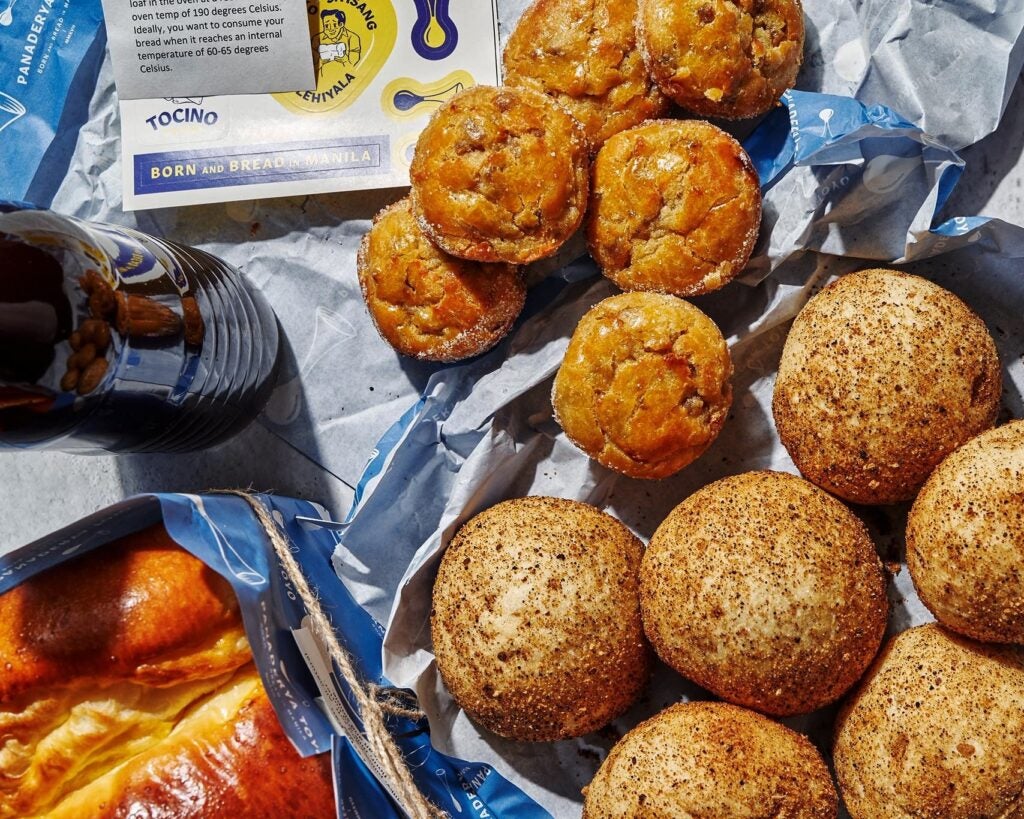
Toyo leche bread, pandesal, and tocino bread from Panaderia Toyo. Photo: Miguel Nacianceno
As someone who was born in the Philippines and grew up eating pandesal from a local bakery for breakfast, I’d be lying if I said I didn’t initially question the hype for this new style of Filipino bread. This new style can now be seen in cafes in our homeland. But all my doubts disappeared when I bit into Kora’s tangy-sweet apple tamarind fritters. The soft crispness of the thickly fried, fruity batter transports me back to the sultry afternoons of my small rural hometown in the Philippines, happily munching on maruya (banana fritters) after returning home from school.
“We don’t make pandesal, but we call ourselves a Filipino bakery,” says Camara. Camara, a Filipino born and raised in New York, is even toying with the idea of eventually making Filipino-style pizza. “that‘Totally authentic about who we are, who I am as a chef, and what I’ve been through. ”
This question of authenticity has plagued (and still plagues) many Filipino chefs. Filipinos are our harshest critics. However, the purpose of these places is not to satisfy every tita and tito. These cafes reflect the generational changes in the diaspora, from older Filipino immigrants seeking the solace of what is left of their homeland to younger immigrants and second generations looking to build something new for themselves.
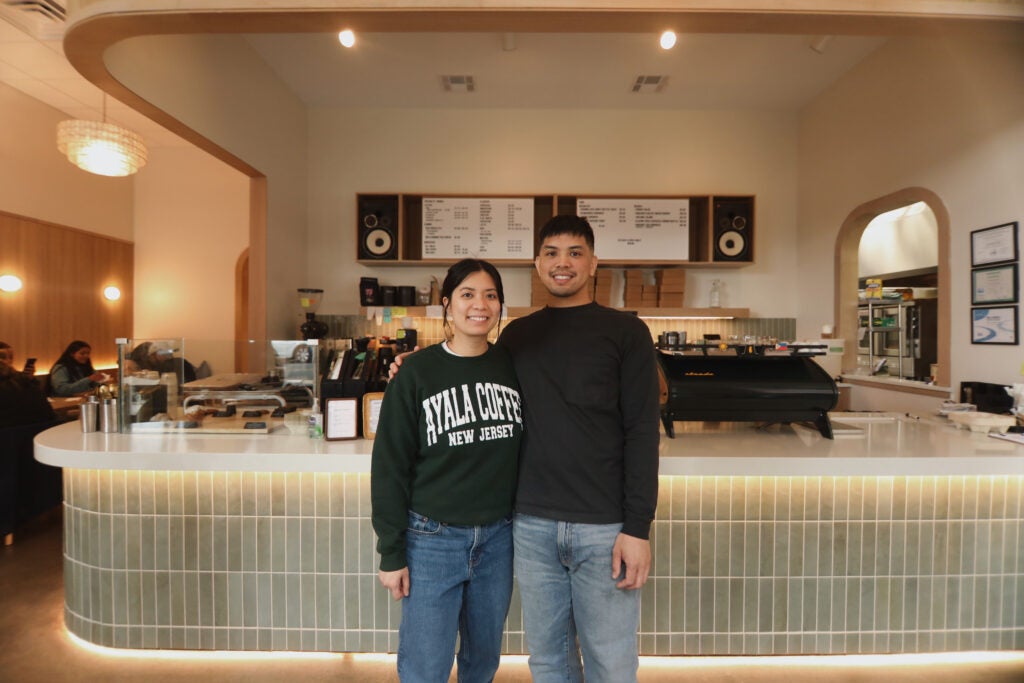
Trixie Jose and Matthew Reyes, co-owners of Ayala Coffee. Photo: Kat Leigh
A big reason why Trixie Jose and Matthew Reyes opened Ayala Coffee in Union, N.J., aside from a desire to brew and serve coffee sourced directly from the Philippines, was to recreate the sense of community their parents had in their classic Filipino shops. The town of Union, and the entire state of New Jersey, has a large Filipino-American population, so there are many restaurants run by Titos and Titas.
Jose recalls going to these places sometimes to eat lunch and often meeting his mother’s friends. “But I rarely saw people my age going there just to hang out,” she says. So she and her husband opened the doors of Ayala Coffee in 2024 with the aim of providing a third space for young Filipinos. “Part of our goal was to capture the lens of our generation with Filipino flavors in an approachable way,” adds Reyes.
Nik Dalman, chef and co-owner of Panaderiya Salvaje in Jersey City, translates Filipino regional cuisine into more accessible foods. He turned dinak dacan, a grilled Ilocos pig’s face dish, into a pot pie and made beef caldereta at Paine Suisse, based on recipes from his father’s hometown in Bukidnon. But when it comes to piaya, a flatbread that stalls in his hometown of Bacolod spread freshly to order, the only change he made was to use butter instead of shortening. “That’s a preference,” he laughed. “Is it because it’s shortening? I don’t like the smell.”
Personally, I’m most excited about Dalman’s sourdough prospects. Like his pre-colonial Filipino ancestors, he plans to use “tuba,” an alcoholic drink made from fermented palm tree sap, as the fermenting agent instead of yeast.
In London, where sandwiches are a lunchtime staple, Filipino bakery and coffee shop Panadera uses slices of chef and owner Florence Mae Maglanok’s signature pandesal bread to make them. This unique take on Filipino daily bread is the result of 20 years of mastering yeast dough, learning it directly from his mother from the age of eight while growing up in Belfast, Northern Ireland.
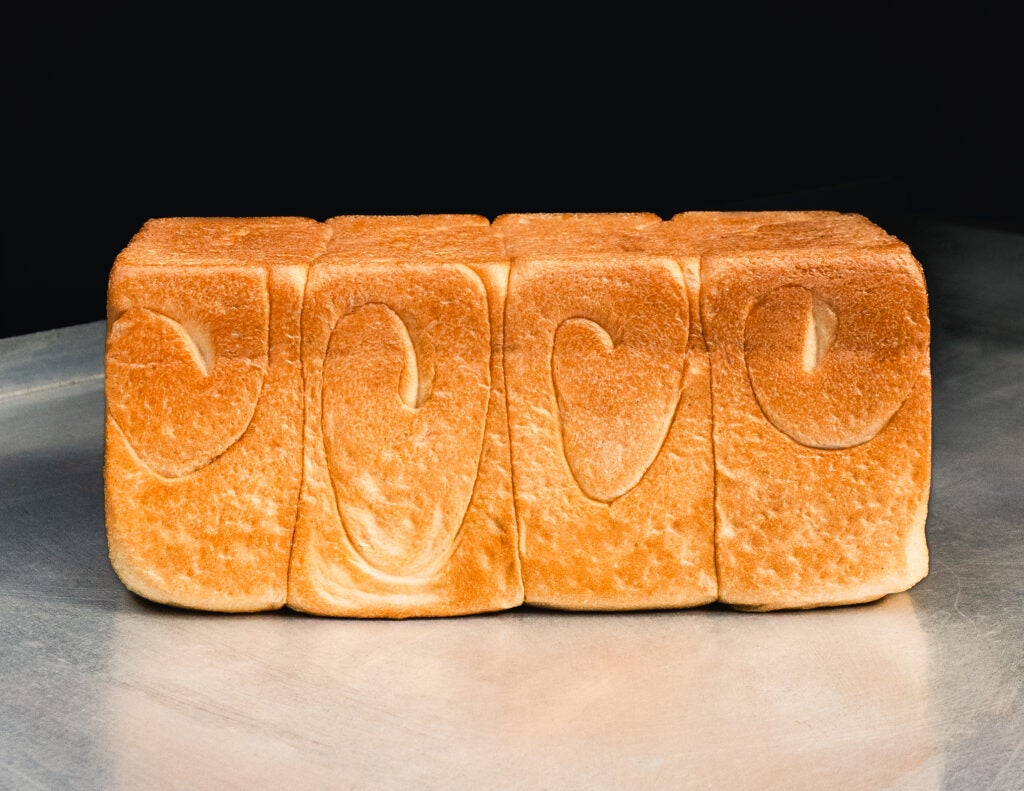
Panadera pandesalpan. Photo: Karl Joel
Panadera’s signature sandwich features corned beef hash with homemade garlic aioli and calamansi ketchup, sandwiched between soft pandesal slices that are lightly sweetened and toasted instead of white bread or traditional pandesal bread. “There are different versions of pandesal,” says Maglanok, who emphasizes that she is not concerned about negative comments about authenticity. “This is just my version. It’s not your version, your mom’s version, your Tita’s version, or the way we do it in Cebu. It’s the way we do it here in London, Soho.”
Given the huge Filipino diaspora, estimated at 12 million people worldwide, it’s no surprise that there are so many new and different interpretations of what a Filipino bakery is.
In the Philippines, chefs like Jordy Navarra of the award-winning Makati City restaurants Toyo and Panaderya Toyo are also experimenting with shapes. One of Navarre’s original creations is Balkan, which means “volcano” in Filipino. It is made by coiling layers of laminated fabric to form a seismic peak that mimics the conical Mount Mayon, a natural wonder held sacred in Philippine mythology.
“We’re not trying to replace things that already exist. They’re classics for a reason. Instead, we build on them,” Navarra says. “This shows that Filipino flavors and traditions are alive, evolving, and able to surprise us again and again.”
Navarra hopes that one day we might find a word that defines Filipino cafe culture, one that is distinctly our own, “much like the Swedes have their ‘fika’ or the Japanese have their coffee shops.” Until then, I’ll park my car at Cora’s table and enjoy my Spam and pimiento cheese bread swiss while drinking my usual salted coconut jam latte.
